
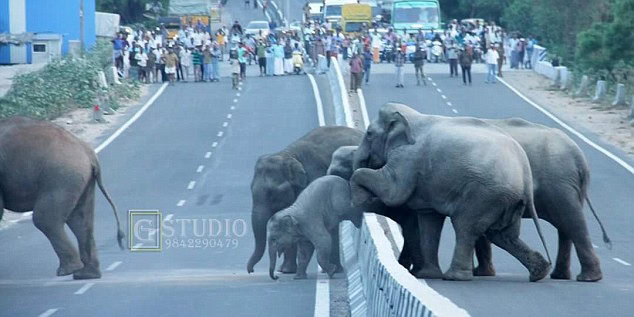
In an adorable but inconvenient scene, a young elephant received a helpful push from its mother while struggling to cross a busy road in Tamil Nadu, southern India.
The small calf was part of an elephant herd that decided to cross the motorway in Coimbatore, resulting in hours of halted traffic as drivers waited for the elephants to finish their journey.

While the sight delighted many, the lengthy hold-up frustrated drivers who had little choice but to watch the majestic creatures go about their day. Yet beyond the immediate inconvenience, the event underscores a deeper issue.
As urban expansion in India accelerates, elephant herds that once roamed extensive forests increasingly find themselves near human developments.

With blocked migration paths, elephants frequently cross into human areas, leading to more encounters.
The Coimbatore area and nearby Hosur and Gudalur are home to nearly 700 elephants. Unfortunately, the consequences of these interactions can be severe. According to local wildlife activists, approximately 20 people are killed by elephants each year in this region.
Additionally, 10 to 15 elephants lose their lives on the roads annually, either due to vehicle collisions or at the hands of poachers.
The issue extends beyond regional concerns. Nationwide data from 2015 reveal that conflicts between humans and wild elephants led to the deaths of 391 people and 39 elephants in a single year.
Wildlife activist Umesh Marudhachalam stresses that the situation is largely human-driven: “The problem is not with the animals; it is with humans.
We have destroyed their habitat and encroached on their migration routes. What remains of these buffer zones should be preserved,” he emphasized.

Blocking traditional migration routes forces elephants to enter human areas, leading to crop damage and, occasionally, deadly confrontations.
Conflicts will likely persist without preserving these natural corridors, putting humans and elephants at continued risk.

Read more Elephant News.


