
In the heart of the deep forest, the tiger is a formidable predator and a symbol of familial strength and unity.
This article delves into the fascinating world of tiger families, where bonds forged through love, responsibility, and cooperation paint a vivid picture amidst the wilderness.

In nature, tiger families typically consist of one to three cubs led by a dominant male and one or more females.
These close-knit bonds extend beyond hunting duties, fostering a nurturing environment where love and mutual support thrive.
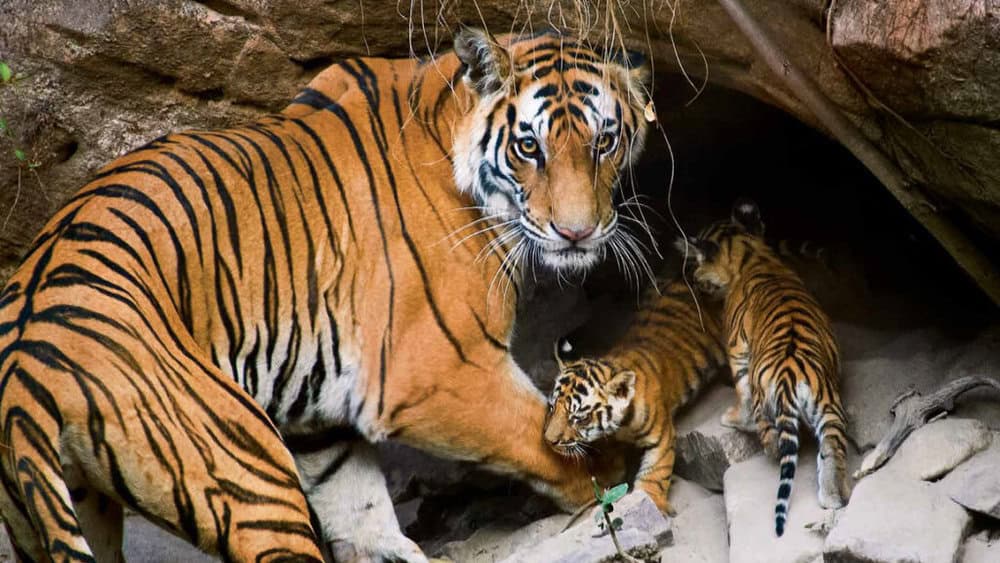
The male tiger, often called the lord of the pride, protects the family’s territory and safety.
Meanwhile, the female, or queen, assumes the crucial role of nurturing and caring for the young, laying the foundation for familial stability and prosperity.
Child-rearing in tiger families is a shared responsibility. The male tiger imparts crucial hunting and self-defense skills to the cubs, while the female provides attentive care with maternal affection.

Tiger families operate as efficient hunting teams, collaborating to increase their hunting success rates and reinforcing familial bonds. This cooperative spirit fosters initiative and teamwork among family members.
Communication within tiger families is predominantly through vocalizations, enabling them to signal attachment and warn of impending dangers.
Clear understanding and consensus among members strengthen their ability to tackle challenges together, maintaining a unified front against adversity.

Beyond their role in the natural ecosystem, tiger families symbolize love, unity, and shared responsibility.
Their resilience and cooperative spirit offer valuable lessons in creating and nurturing warm and supportive home environments.




Read more Wildlife News.


