
Some sounds linger in the air long after they’ve come and gone. Soft and steady, they wait until they receive the attention they need.
The exact amount of time this sound had echoed unnoticed is unknown. It wasn’t loud or imposing—just a faint whisper in the wind, often mistaken for mundane background noise. Yet, there was something different about this sound.
It signaled a plea for help.
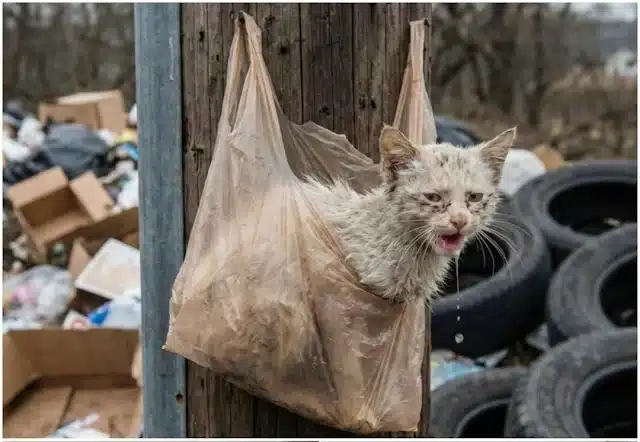
Out on the edges of a lonely expanse filled with discarded remnants, lay a tiny kitten curled on the cold ground. Too young to comprehend the weight of his world, every breath seemed laborious and warmth was a distant dream. With frail movements and half-open eyes, the kitten was exhausted, caught between past hardships and the hope of what’s possible.
This kitten, although nameless at that time, would later be called “Hope.”
His cries weren’t frantic, but rather a quiet acknowledgment of need—soft, as if unsure of asking for too much—his only way of seeking help that silence couldn’t provide.
His eyes sought familiarity in the shadows—a shape, warmth, any sign of life—only to be met with solitude. The world felt boundless, and he felt minuscule against its vastness.
Yet, he kept crying out.
Nearby, the sound of footsteps slowed.
Initially dismissed like an echo of the day, the cry had a persistent pull, urging attention time after time. Curiosity morphed into concern as someone finally decided to follow the sound.
They found him—a tiny kitten, alone, nearly motionless.
Time seemed to halt. A mix of fear, sadness, and urgency swept over. At times like these, people often hesitate—not out of indifference but fear of what they might confirm—the presence of a being that needs help, and the responsibility that comes with it.
But compassion stepped in swiftly.
Gentle hands carefully lifted the fragile creature, Hope. He was lighter than expected, a shaky bundle of exhaustion that relaxed slightly when wrapped in warmth, his cries mellowing, having given all he had just to survive.
There was no debate about their next move.
Hope was taken immediately to a veterinary clinic.
The drive seemed eternal, each movement of the car matched with glances at the frail ball of life in the seat. Was he breathing? Was his chest still moving? Hope lay still, eyes half-open, with an awareness, as if sensing something significant was unfolding.
Upon arrival at the clinic, the atmosphere became calmly urgent. The vet examined Hope with care, explaining each step in a composed voice. Though uncertainty loomed, no one turned away.
“He is very weak, but we will try,” the vet said softly—words that promised more than just assurance; they spoke of commitment.
Slowly, warmth returned to Hope’s small body. Fluids were given carefully, nourishment offered drop by drop. The process was patient, with no assumptions made about the outcome, only attention to the immediate needs.
The first night stretched long and tense.
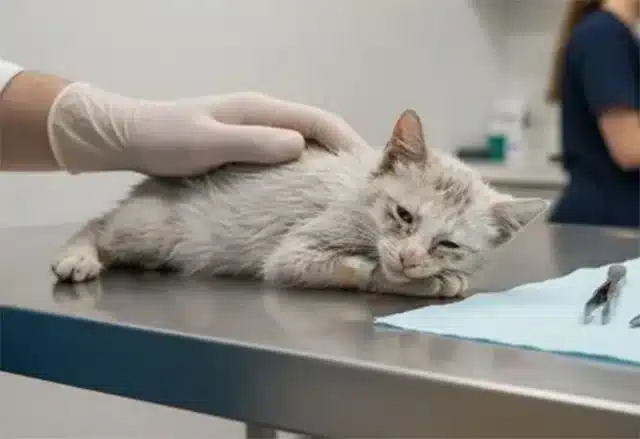
Hope scarcely moved, his body still grappling with neglect and fatigue. Those watching over him stayed close, not daring to leave him alone, afraid the silence might signify something final. Each breath, every twitch of a paw, was a small but significant sign of life.
This was no longer just a rescue; it turned into an act of faith.
As dawn quietly broke, a shift occurred.
Hope’s eyes opened a bit wider. He didn’t cry or move much but looked around as if trying to comprehend his new environment. For the first time, his gaze met another’s. Though small, this instance held great weight in a bustling world.
In that glance dwelled trust.
His recovery was a slow journey.
It didn’t travel in a straight line. Progress mixed with setbacks. Sometimes he accepted care eagerly; other times, fatigue returned, demanding more rest. But day by day, there were small victories pointing forward.
Hope began accepting food more readily, his breathing steadier, his body more relaxed under gentle touch, leaning into warmth rather than withdrawing.
And then, one day, the sound of a purr filled the room.
It was soft and irregular but unmistakable.
The relief it brought couldn’t be matched with words. That purr was not just comfort; it signaled connection and healing—both physical and emotional.
Hope’s story is compelling not only because of his survival but also for his open acceptance of kindness.
Without clinging to fear, he welcomed care, never questioning if he deserved it. He accepted help wholeheartedly, reminding everyone that compassion needs no justification.
As Hope’s strength returned, his personality emerged.
He became inquisitive, his eyes tracking movement, his tiny paws exploring his surroundings. He attentively listened to voices, responding with interest, not alarm. His life, once a fragile existence, began to grow.
Hope’s story quietly spread—shared not for attention but for its profound meaning. It served as a reminder of how easily suffering can go unnoticed and the impact when someone chooses to stop and help.
Hope became a symbol—not of hardship, but possibility.
He showed that compassion doesn’t require perfection or expertise, only presence and a willingness to respond to a simple cry for help.
Today, Hope is safe and warm.
He eats confidently, sleeps deeply, and leans into the care and affection surrounding him as if it was always meant for him. His life, once teetering on uncertainty, now moves forward with quiet assurance.
Hope’s story transcends a kitten’s tale.
It is about the people who paused, the ones who listened, and those who chose to intervene.
It’s about the quiet power found in recognizing pain and responding with kindness.
In our world, change doesn’t always come from grand gestures.
Sometimes, it begins with a single cry—
and the courage to answer it.
Read more Dogs News.