
The Shining Honeycreeper, a small, vibrant bird often mistaken for a warbler, is a frequent visitor to the foothills and lowland regions, mainly where evergreen forests thrive. This colorful tanager is commonly seen around the edges of humid forests.
Description:
Known scientifically as Cyanepres lucidus, the Shining Honeycreeper is an eye-catching member of the tanager family. Measuring about 10 cm in length, it has a compact, round body, a slender curved bill, and a short tail.
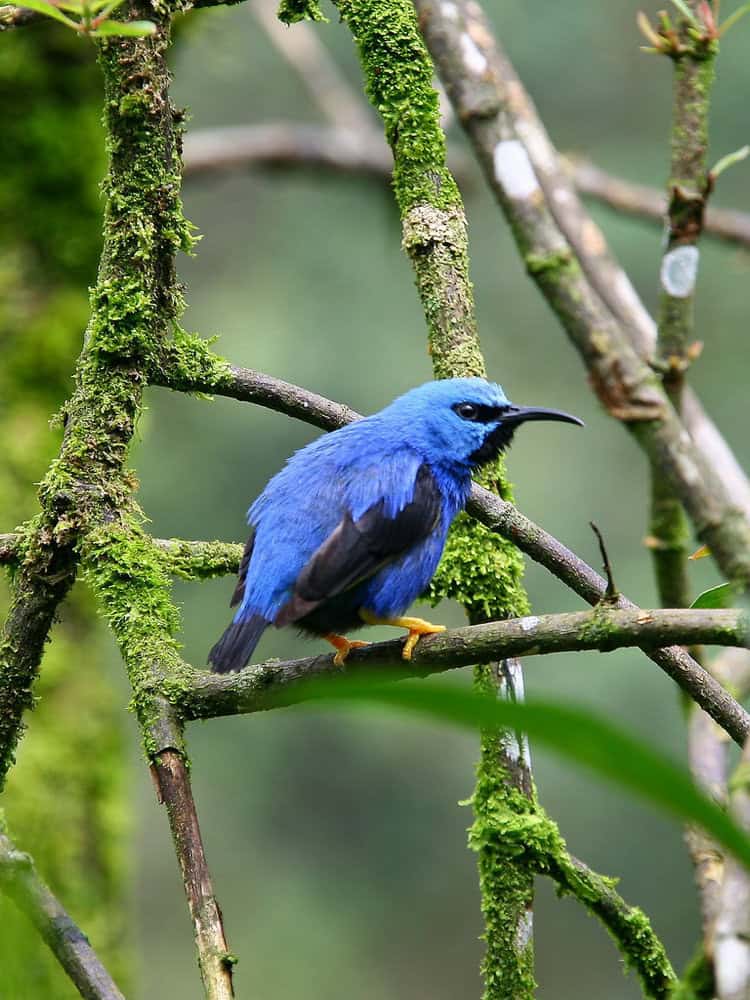
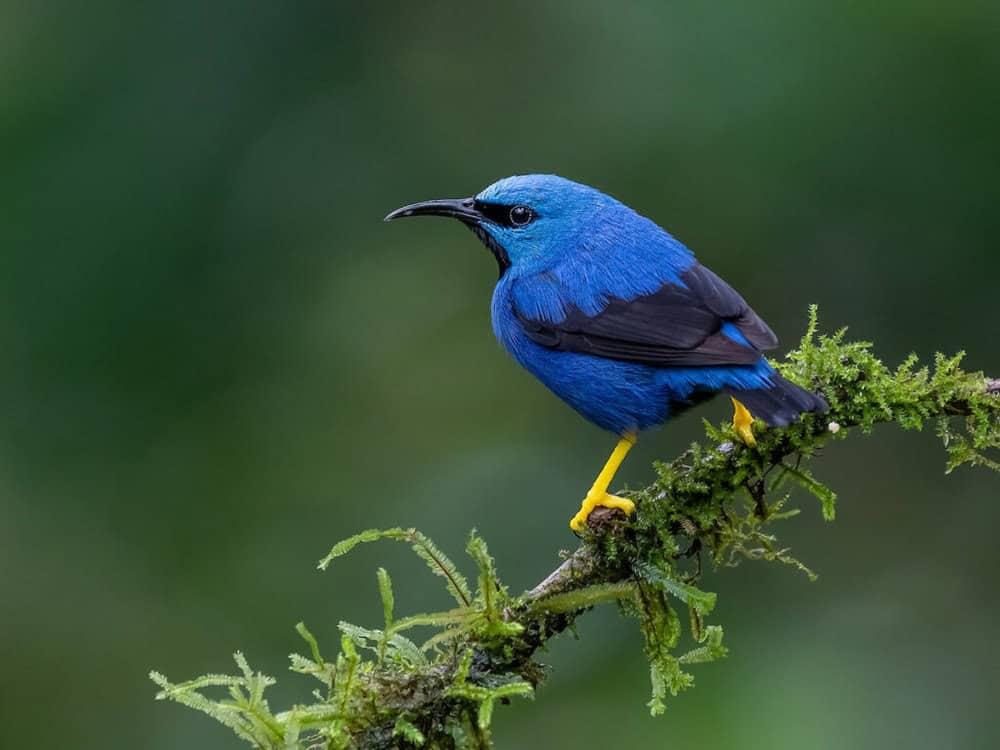
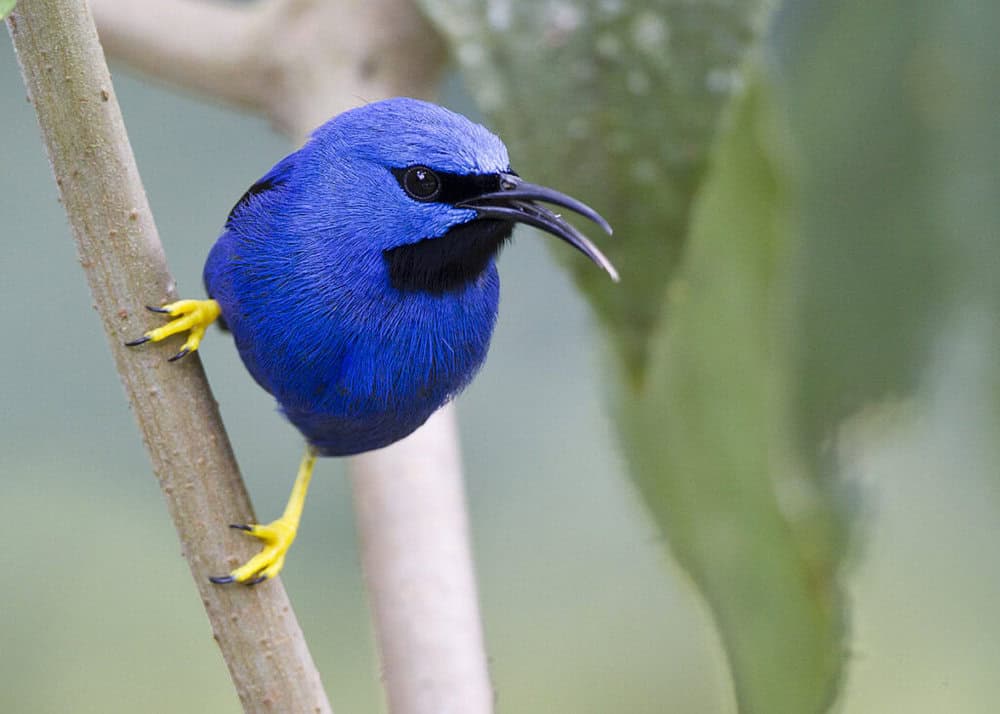
Male Shining Honeycreepers are especially striking with their purplish-blue feathers, bold black throat and chest patch, black wings, and bright yellow legs accented by sharp black claws.
Female Shining Honeycreepers are just as distinctive, sporting a green body highlighted by a blue facial stripe, streaks of blue across the chest, and a buff-colored throat.
Distribution:
This bird’s range extends from southeastern Mexico to northwestern Colombia, but it is particularly common in Panama. It typically inhabits elevations up to 1,600 meters on the Caribbean side and is also found along the Pacific slope, from the Canal area eastward.
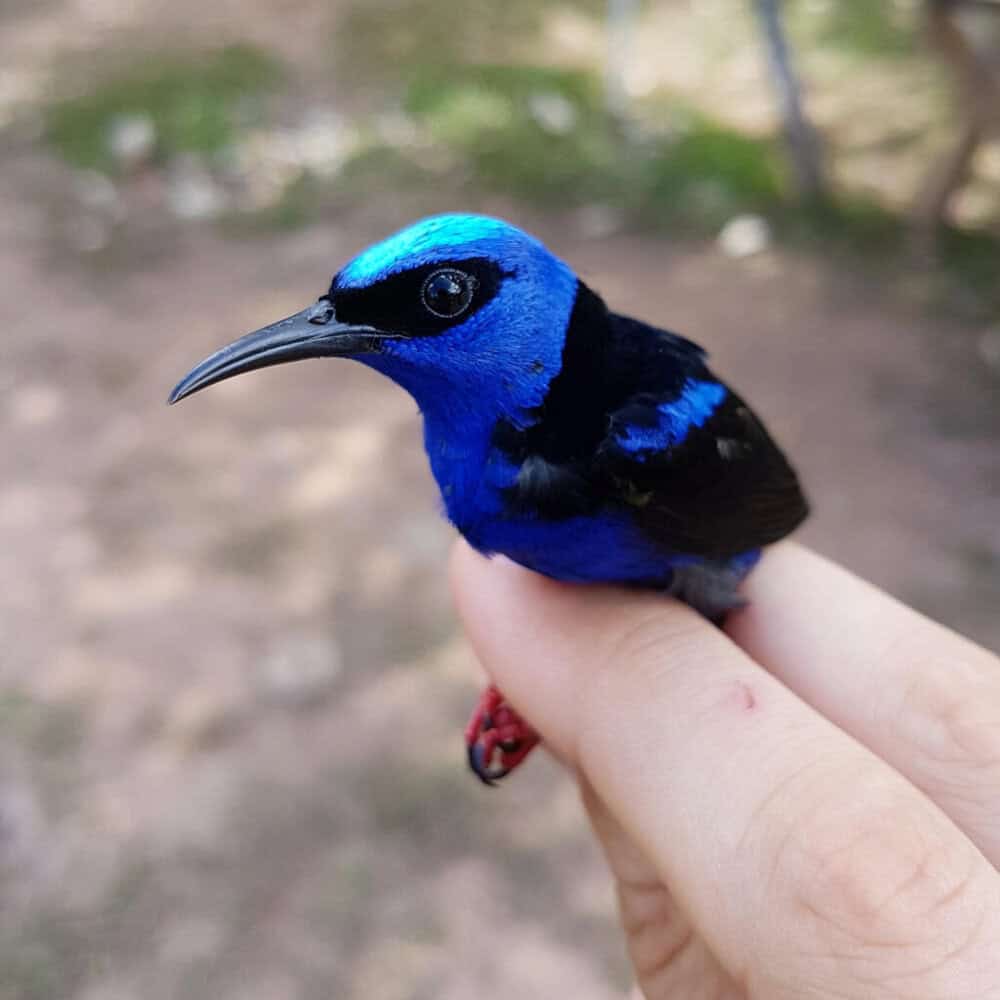
Birdwatchers often see Shining Honeycreepers at feeders in locations like Cerro Azul and observation platforms such as the Canopy Tower and Canopy B&B.
Habitat and Diet:
Preferring the upper reaches of forest canopies, Shining Honeycreepers have a diverse diet that includes fruits, insects, and nectar. Skilled foragers they search for small arthropods on vines and branches, sometimes catching flying insects mid-air or probing dead leaves to find hidden prey.
These birds are typically seen in pairs or small groups, often joining mixed-species flocks of tanagers and other fruit- and insect-eating birds.
Known for their assertive nature, they often outcompete larger species like Red-legged Honeycreepers when food is scarce. They are also regular visitors to hummingbird feeders to sip nectar.
Nesting:
During the breeding season, female Shining Honeycreepers build shallow cup-shaped nests from plant fibers, securing them to thin branches. Each nest contains two eggs, visible through the nest’s delicate structure.
After a 12-13 day incubation period, the female cares for the nestlings with the help of the male, who brings insects, supplemented with berries and fruits as the young grow. Fledglings are ready to leave the nest at around 13-14 days old.
Conservation Status:
According to the IUCN Red List, the Shining Honeycreeper is considered a species of least concern, with stable population levels across its range.
Read More Birds