
The 1955 Chevrolet Bel Air Nomad redefined the American station wagon, blending style, power, and practicality into an unforgettable package.
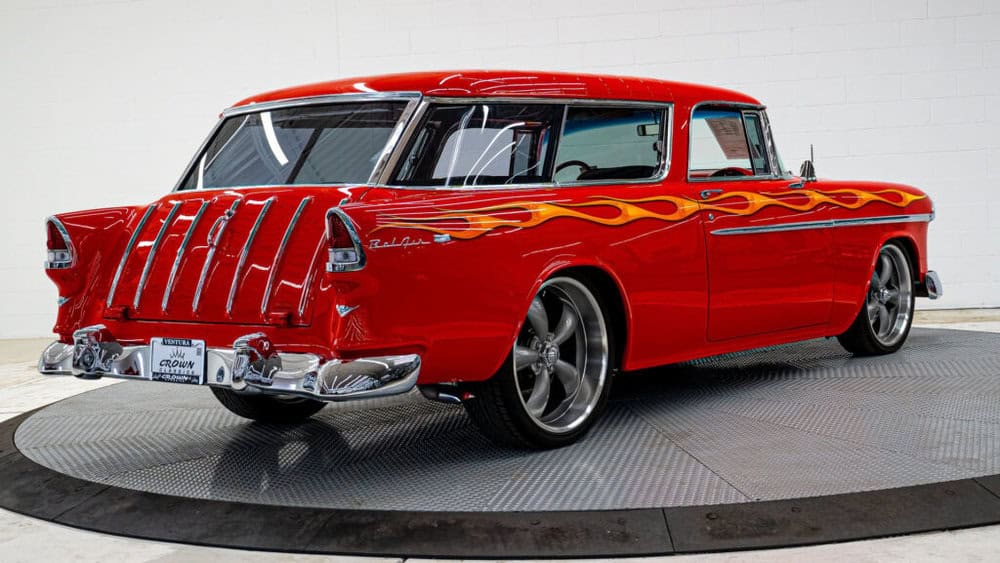
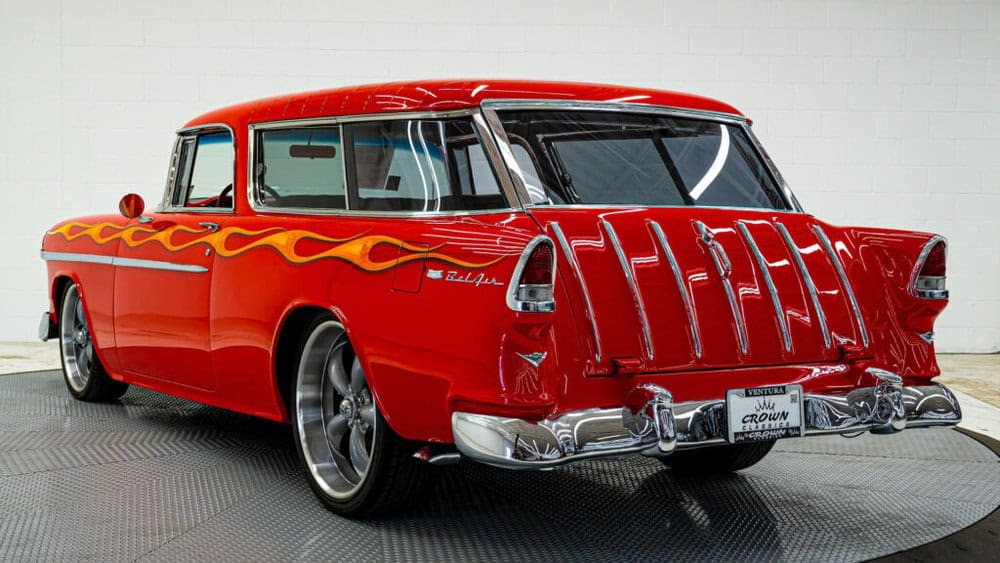
This two-door wonder departed from the boxy designs of the past, featuring a sleek, sloping roofline reminiscent of a sports coupe while maintaining the versatility of a family wagon.
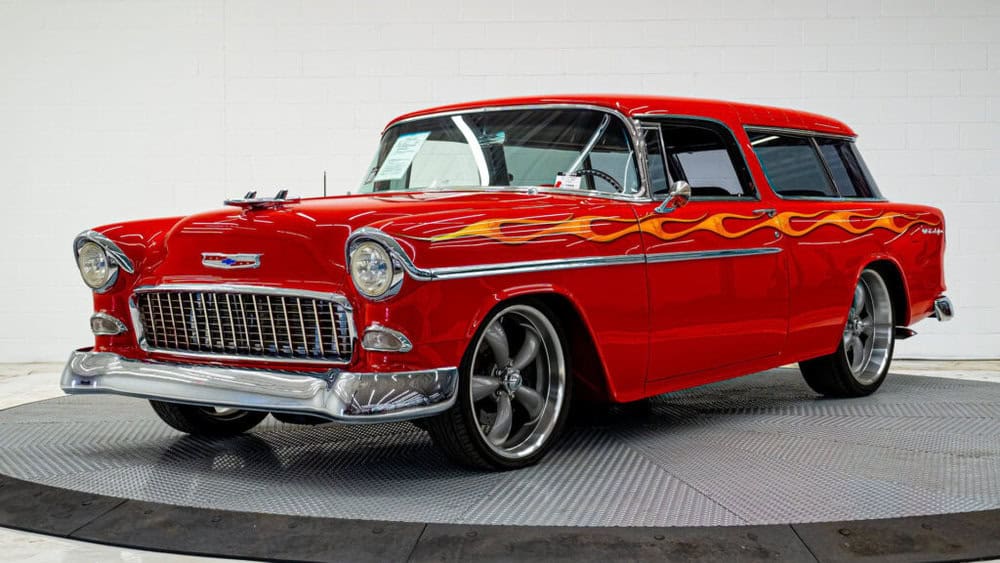
Chevrolet’s decision to prioritize aesthetics alongside functionality led to the creation of the Bel Air Nomad.
This wagon stood out from the crowd with its eye-catching two-tone paint schemes, chrome accents, and Bel Air trim.
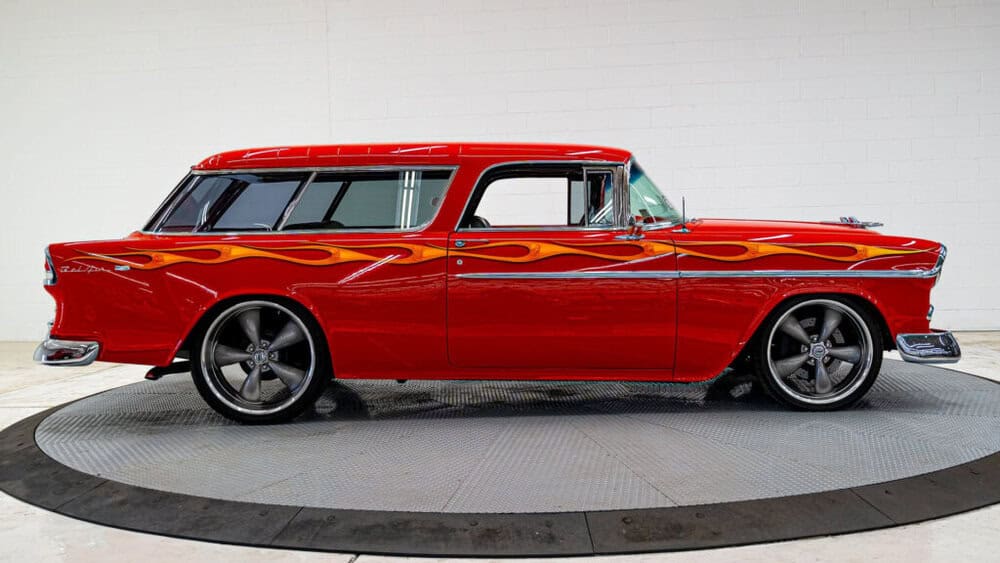
Motoring journalists hailed its innovative design, recognizing its ability to integrate style with performance and utility seamlessly.
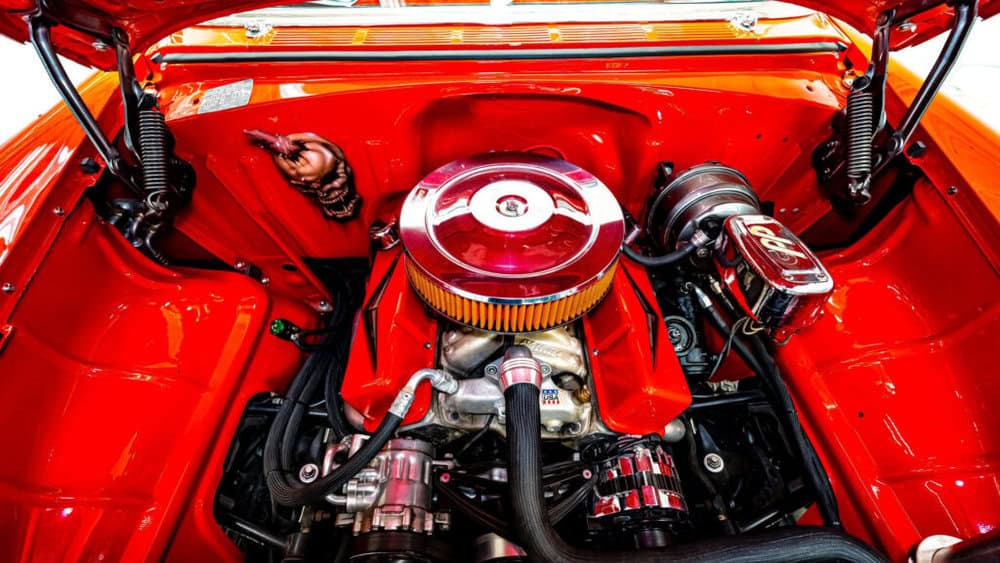
Under the hood, the Bel Air Nomad boasted impressive power options. Equipped with Chevy’s renowned 235 cubic inch “Blue Flame” inline six-cylinder engine as standard, it also offered the option of a potent 265 cubic inch small block V8 or the top-tier 283 cubic inch V8, providing up to 220 horsepower.
Paired with a four-speed manual gearbox or the smooth Powerglide automatic transmission, the Nomad offered a thrilling driving experience for enthusiasts.
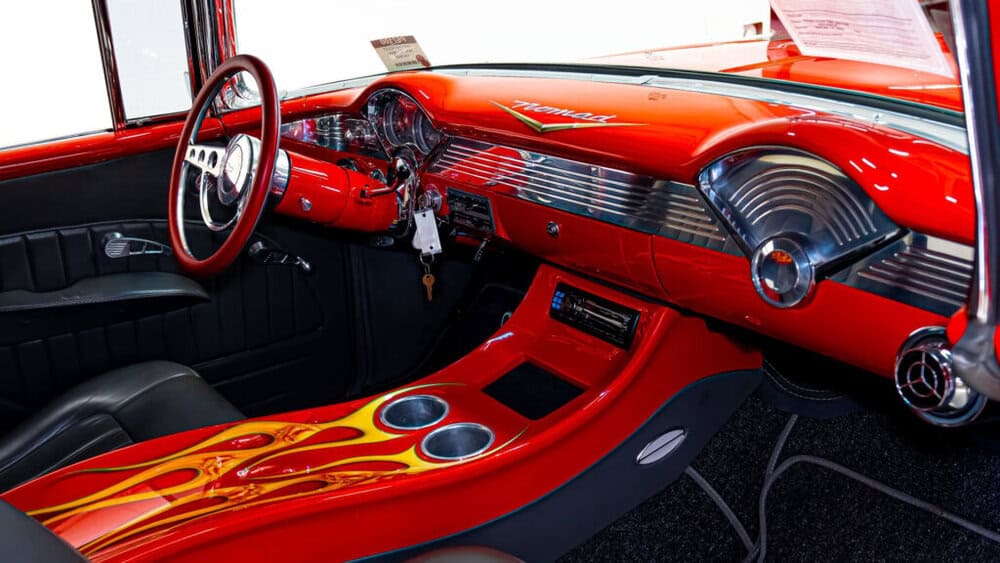
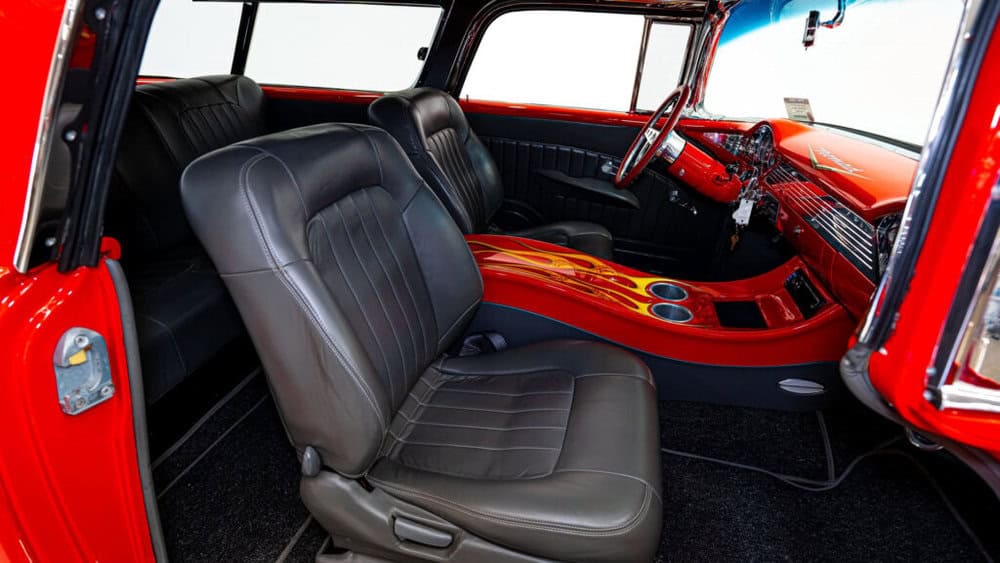
Inside, innovative engineering solutions ensured ample interior space despite the radical roofline. Lower-mounted seats provided comfortable seating for six passengers, complemented by Chevy’s modern dashboard design and upscale upholstery.
The rear cargo area featured sturdy flooring, side panels, and a convenient roll-down rear window for easy access.
The Bel Air Nomad’s popularity soared, outselling traditional station wagons and giving rise to a new genre – the family sport wagon.
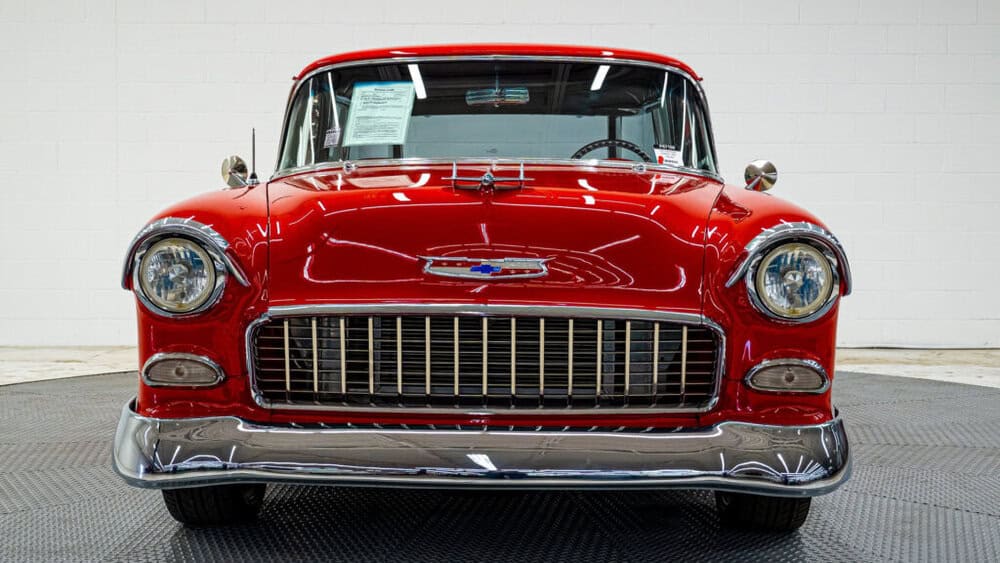
Its success spurred competitors to follow suit, with other automakers quickly adopting the sedan styling cues and wagon practicality pioneered by the Nomad.
Though produced for only three model years, the Bel Air Nomad left a lasting legacy on the American automotive landscape.
Its revolutionary design and powerful performance continue to captivate collectors, cementing its status as an all-time classic in station wagons.

Read more Classic Cars News.