
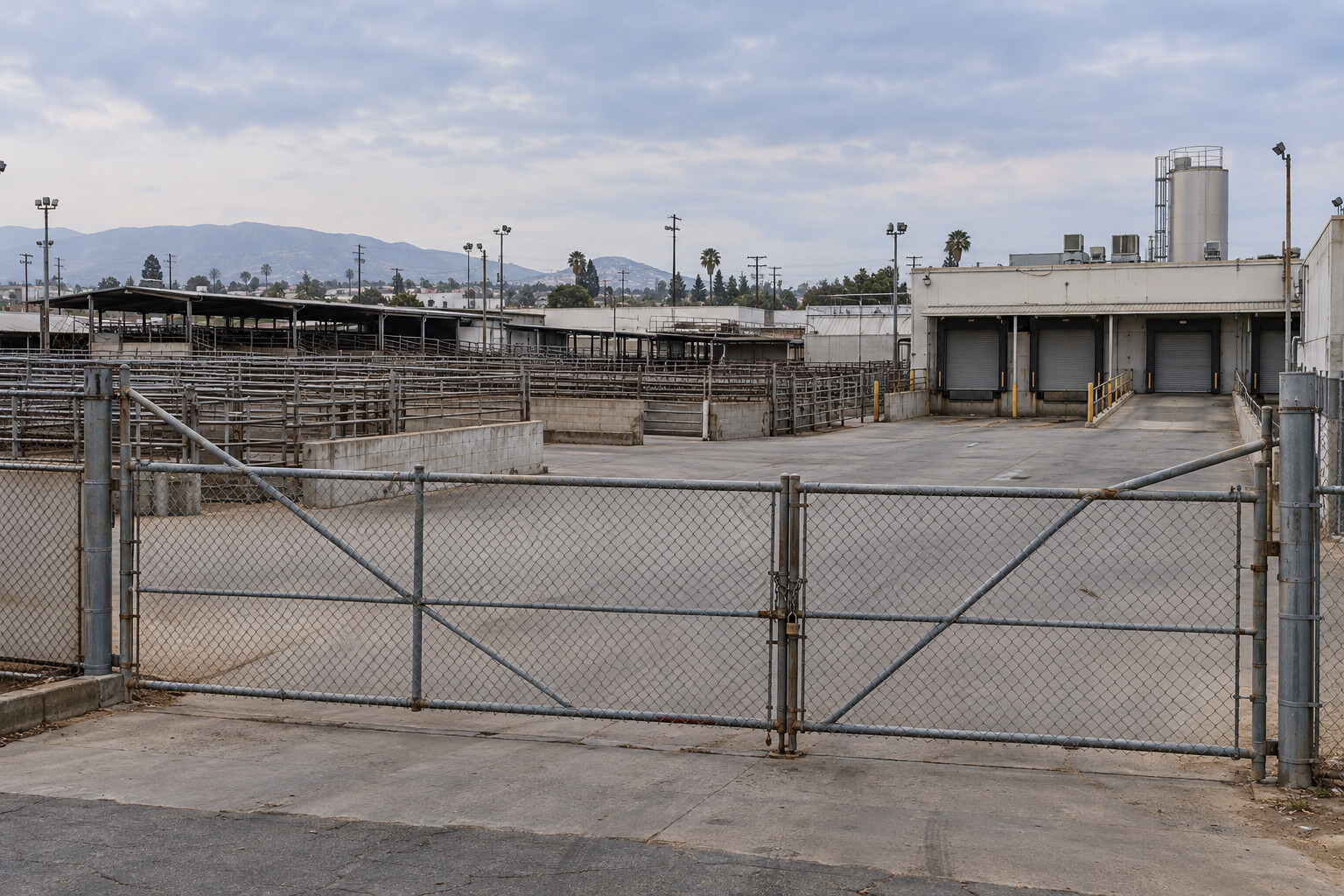
Los Angeles County’s last operating cattle slaughterhouse will not reopen at its longtime Pico Rivera site. Manning Beef stopped operating in late 2025, and on June 22, 2026, the Pico Rivera Planning Commission unanimously revoked the conditional-use permit that had allowed slaughterhouse operations on the property.
The distinction matters. The facility had already closed after financial and operational trouble; the later city decision made that shutdown permanent from a land-use standpoint. By revoking Conditional Use Permit 92-520, city officials removed the authorization needed to resume slaughterhouse activity at the location.
A closure followed by a permanent permit decision
Manning Beef had operated for decades in Pico Rivera, an industrial city southeast of downtown Los Angeles. Local and regional reporting identified it as the final cattle slaughterhouse still operating in Los Angeles County. The company filed for bankruptcy protection before ceasing operations in late 2025.
At a public hearing on June 22, 2026, the Planning Commission considered whether the permit should remain in force. The commission voted to revoke it, closing the regulatory path for a future operator to restart slaughter at the same site under that approval. The decision did not merely acknowledge that Manning Beef had gone out of business; it changed what could legally operate on the property.
Animal-welfare scrutiny preceded the shutdown
The plant had faced years of scrutiny over animal handling and sanitation. Animal Outlook, an animal-protection organization, said an investigator worked inside the facility from October through December 2024 and documented alleged mistreatment, including repeated stunning attempts and animals showing signs of consciousness during processing. Those allegations were presented to government authorities and later became part of the public debate over the plant’s future.
The Los Angeles Times also reviewed federal inspection records and reported that the U.S. Department of Agriculture temporarily suspended operations in 2022 after a cow that was still breathing was hoisted following an unsuccessful stunning attempt. Records cited by the newspaper also described sanitation problems in 2023. Animal Outlook said it identified dozens of humane-handling incidents between 2018 and 2024, although that total is the organization’s analysis rather than an independent government count.
The facility had drawn wider attention in 2021 when cattle escaped and ran through nearby streets. That episode, although separate from the later undercover investigation, intensified public concern about slaughterhouse operations in a densely populated urban area.
What the decision means now
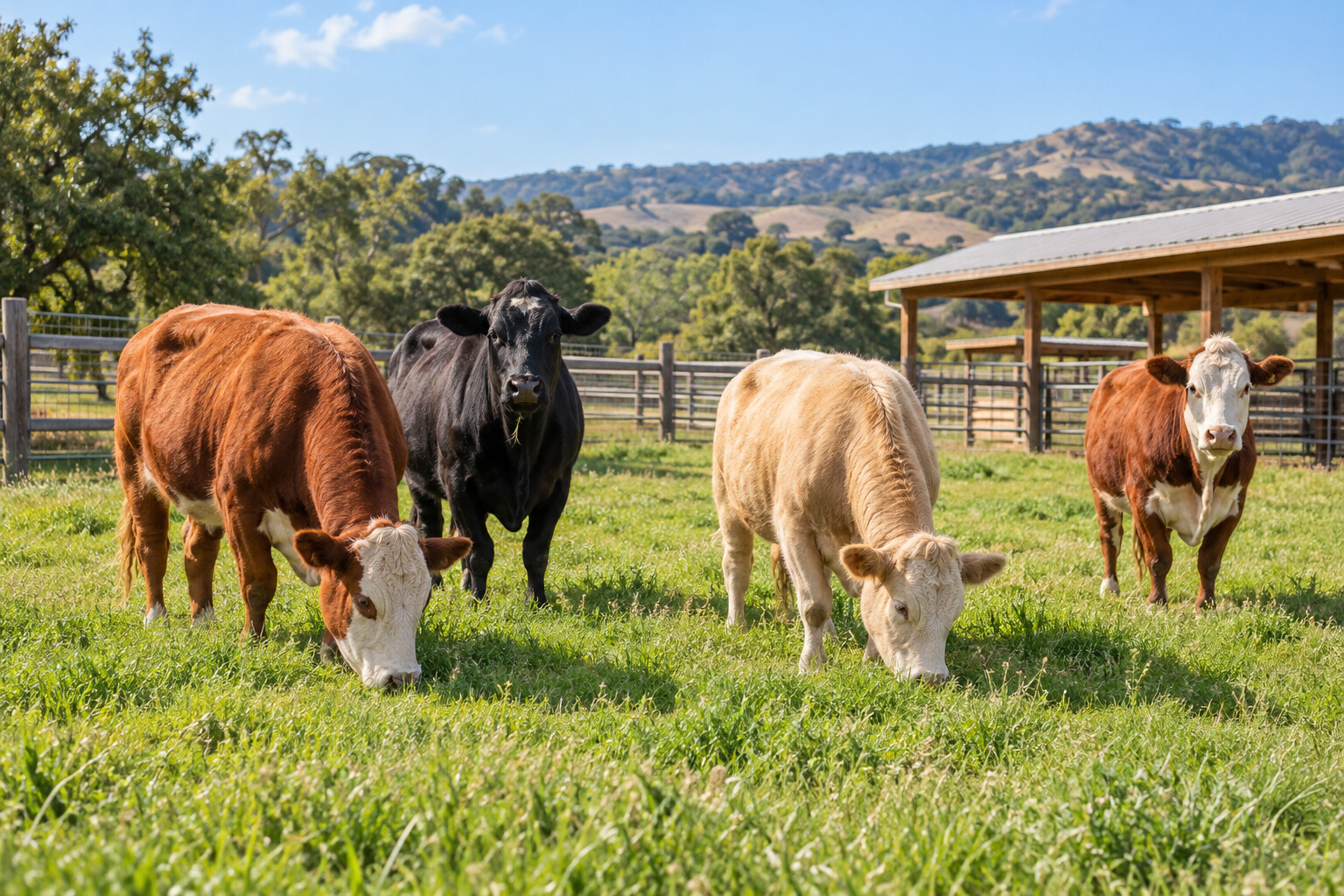
For animal advocates, the permit revocation is significant because it prevents a simple change of ownership from bringing cattle slaughter back to the property. Animal Outlook called the vote a permanent victory for animals, while Farm Sanctuary had previously described the plant’s late-2025 closure as the end of cattle slaughter in Los Angeles County.
The ruling does not end all slaughterhouse activity across Southern California, and it does not by itself determine the property’s next use. Earlier reporting said Pico Rivera officials were exploring acquisition and redevelopment options, but no completed redevelopment should be assumed until the city announces one.
The confirmed outcome is narrower but consequential: Manning Beef is closed, its former permit has been revoked, and the site no longer has city approval to operate as a slaughterhouse. The case also shows how financial collapse, regulatory enforcement, investigative documentation and local land-use authority can converge to make an animal-industry closure permanent.
Sources
- City of Pico Rivera — Planning Commission public hearing
- Los Angeles Times — closure and federal inspection history
- CBS Los Angeles — late-2025 closure and bankruptcy context
- Animal Outlook — investigation and permit-revocation account
