
Circus-Theater Roncalli has spent years showing that a circus can create wonder without transporting or training live animals for the ring.
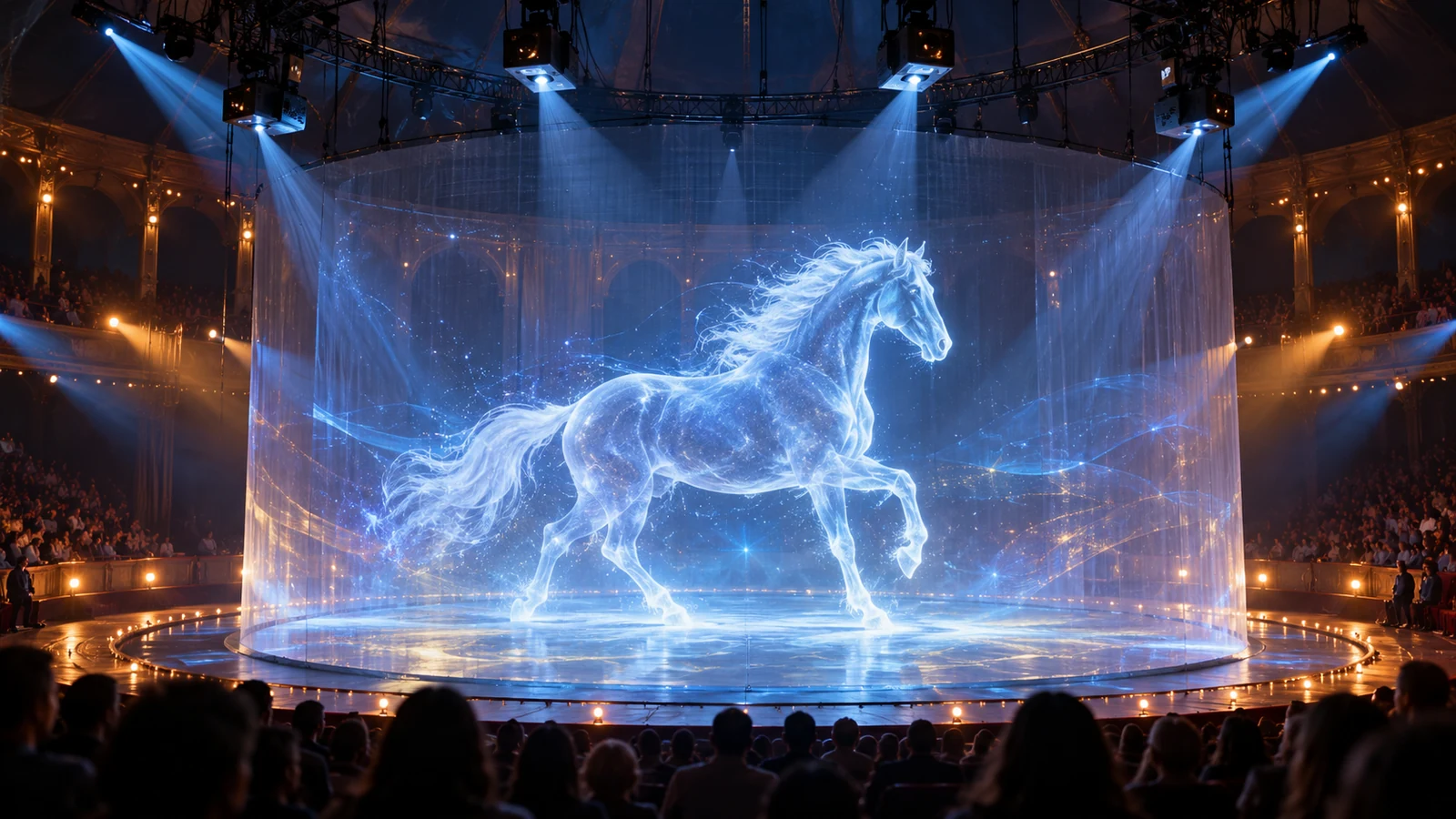
The German company removed live animals from its program in 2018 and introduced large-scale projected creatures in its “Storyteller” production. Audiences could watch elephants, horses and other animals appear to move around the circular arena while the real show continued to center on human performers, music, lighting and theatrical design.
The images have often been described as “3D holograms.” That label captures the illusion, but it is not technically exact: the animals are video projections displayed on a transparent screen, creating a hologram-like effect for spectators around the ring.
An animal-free change that began in 2018
Roncalli’s own history says its “Storyteller” tour marked the point when the company became completely free of animal performances. An official company page also confirms that it has not used real animals since 2018.
The transition had begun much earlier. Roncalli stopped presenting lions and elephants in 1991. Horses and ponies remained longer, but the company retired its final live-animal acts before launching the fully animal-free production.
The decision reflected both animal-welfare concerns and the practical limits of touring. Circus management has said city-center sites often lacked enough space for outdoor animal enclosures, while repeatedly loading horses into vehicles and moving them between cities created additional strain.
This was not a recent response to one isolated controversy. It was a long-term change in the company’s artistic direction and touring model.
How the projected animals work
The 2018 production used eleven Optoma laser projectors to deliver imagery around the ring. The system was developed with blueBOX and the creative agency Tag/Traum after a two-year production process involving 3D specialists.
Industry reporting described a display approximately 32 meters wide and five meters high, designed to remain visible around the circular performance space. Projected imagery on a transparent surface made elephants, horses and other figures appear present without placing live animals onstage.
Because the result is presented on a screen, “video projection” or “hologram-like projection” is more precise than suggesting a free-floating hologram. The distinction does not reduce its visual impact. Animation can create animals and movements that would be impossible—or unsafe—to attempt with living performers.
A different model for circus entertainment
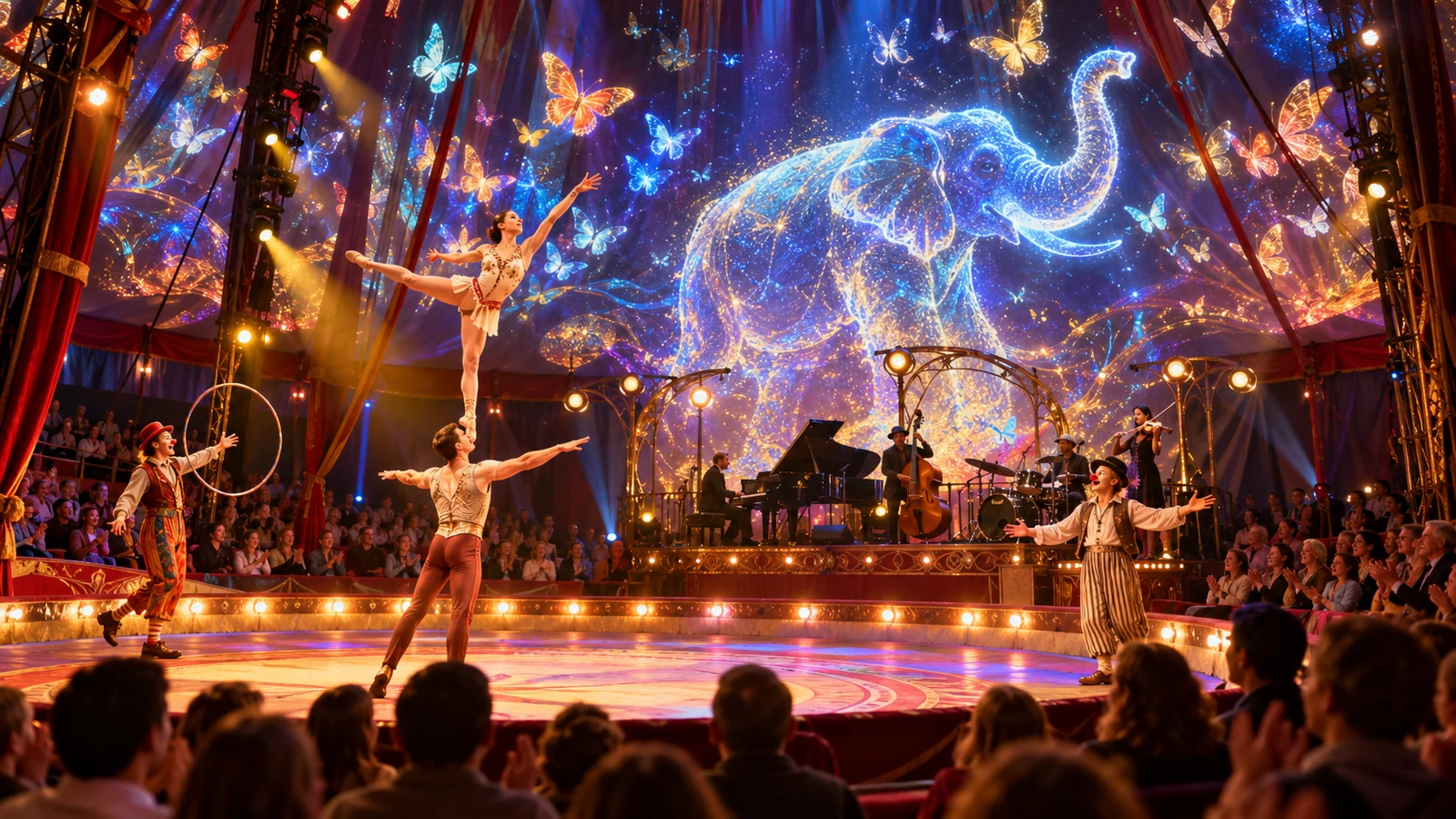
Roncalli did not remove spectacle from its shows. It shifted the focus toward acrobats, clowns, live music, costumes and digital stagecraft. The virtual animals became part of that theatrical language rather than trained beings required to travel and perform.
The company said the change received strong public support. Its founder, Bernhard Paul, reported that 95 percent of more than 20,000 messages received after the announcement were positive, while the 2018 show attracted more than 600,000 visitors in one year.
Those figures come from the circus itself, but they show why the experiment matters to the wider debate about animals in entertainment. Roncalli offers a concrete example of a touring company replacing live animal acts without abandoning the visual tradition audiences associate with the circus.
The projected elephant is not a living animal and cannot replace seeing wildlife in a natural habitat. But in an entertainment venue, that is precisely the point: no elephant has to be confined, transported or trained for the illusion to work.
Sources
- Circus-Theater Roncalli: company history
- Circus-Theater Roncalli: animal-free since 2018
- Golem: the images are video projections on a transparent screen
- Attractions Management: production and projector details
- Euronews/AFP: animal-welfare and touring context
