
The debate over animals in circuses is often framed as a choice between animal welfare and human livelihoods. That framing is too narrow. A circus can employ performers, technicians and touring crews without building its show around captive wild animals—and one of the industry’s best-known names is doing exactly that.
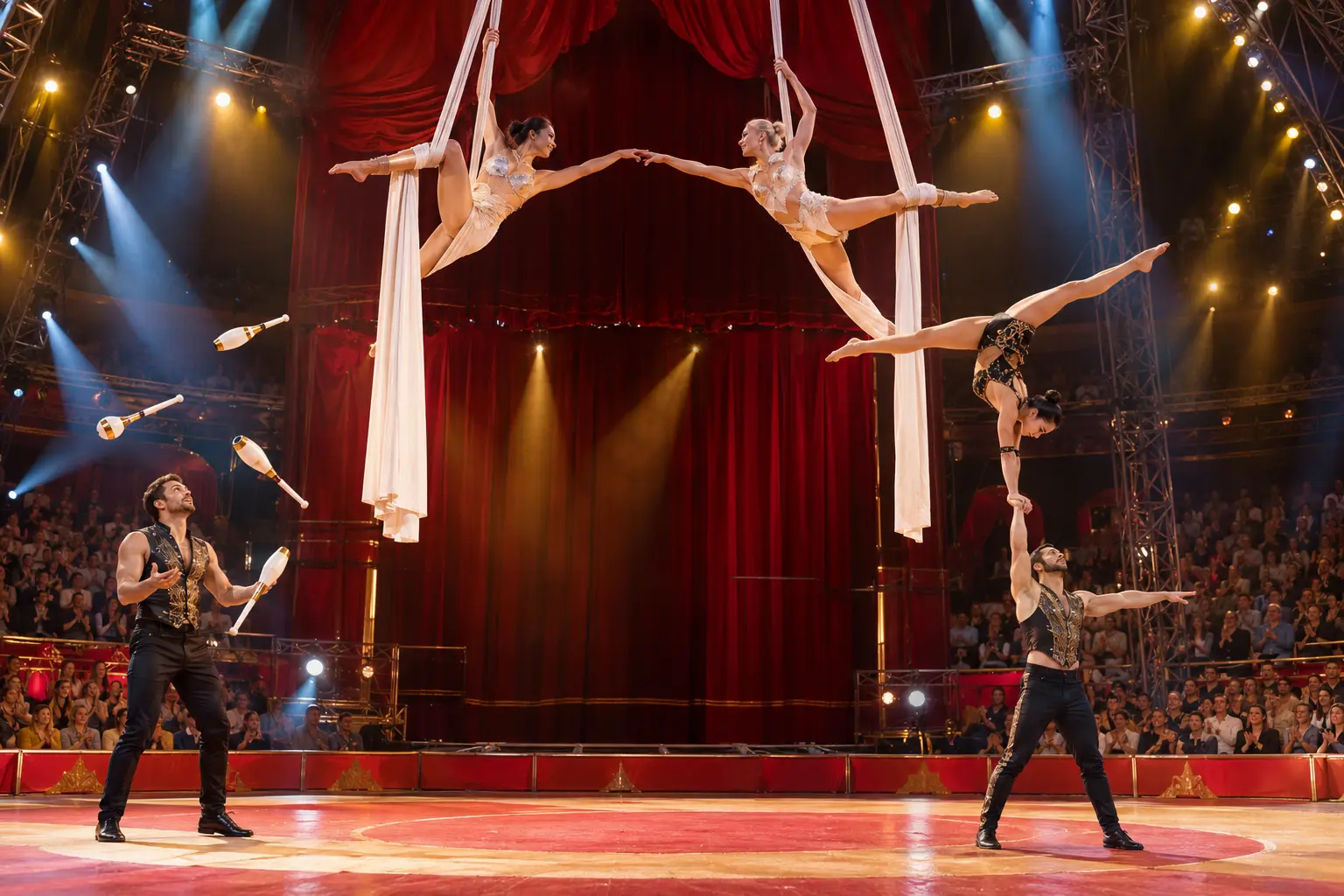
Ringling Bros. and Barnum & Bailey returned to touring in 2023 after announcing a reimagined production. Its current 2026 program describes a two-hour show featuring 65 performers from 17 countries and promotes the production as a celebration of “human talent.” The company’s published lineup emphasizes aerialists, acrobats, unicyclists, stunt performers and other people rather than animal acts.
Restrictions do not have to end the circus
Some U.S. states have restricted wild or exotic animals in traveling entertainment. New Jersey’s 2018 “Nosey’s Law,” for example, prohibits using a wild or exotic animal in a traveling animal act. The law defines those acts broadly enough to include circuses, fairs, parades and similar live entertainment, while preserving specific exceptions for activities such as certain educational or conservation programs.
Those rules can change which acts a business offers, but they do not ban acrobatics, music, comedy, lighting, costumes or the many other parts of a circus production. Ringling’s continuing tour is practical evidence that a large show can sell tickets and move from city to city while focusing on people.
The jobs question still matters
Workers should not be dismissed when an industry changes. Trainers and handlers whose work depends specifically on animals may need time, support and new opportunities. Employers and policymakers can help through retraining, reassignment and transition planning rather than leaving those workers to carry the cost alone.
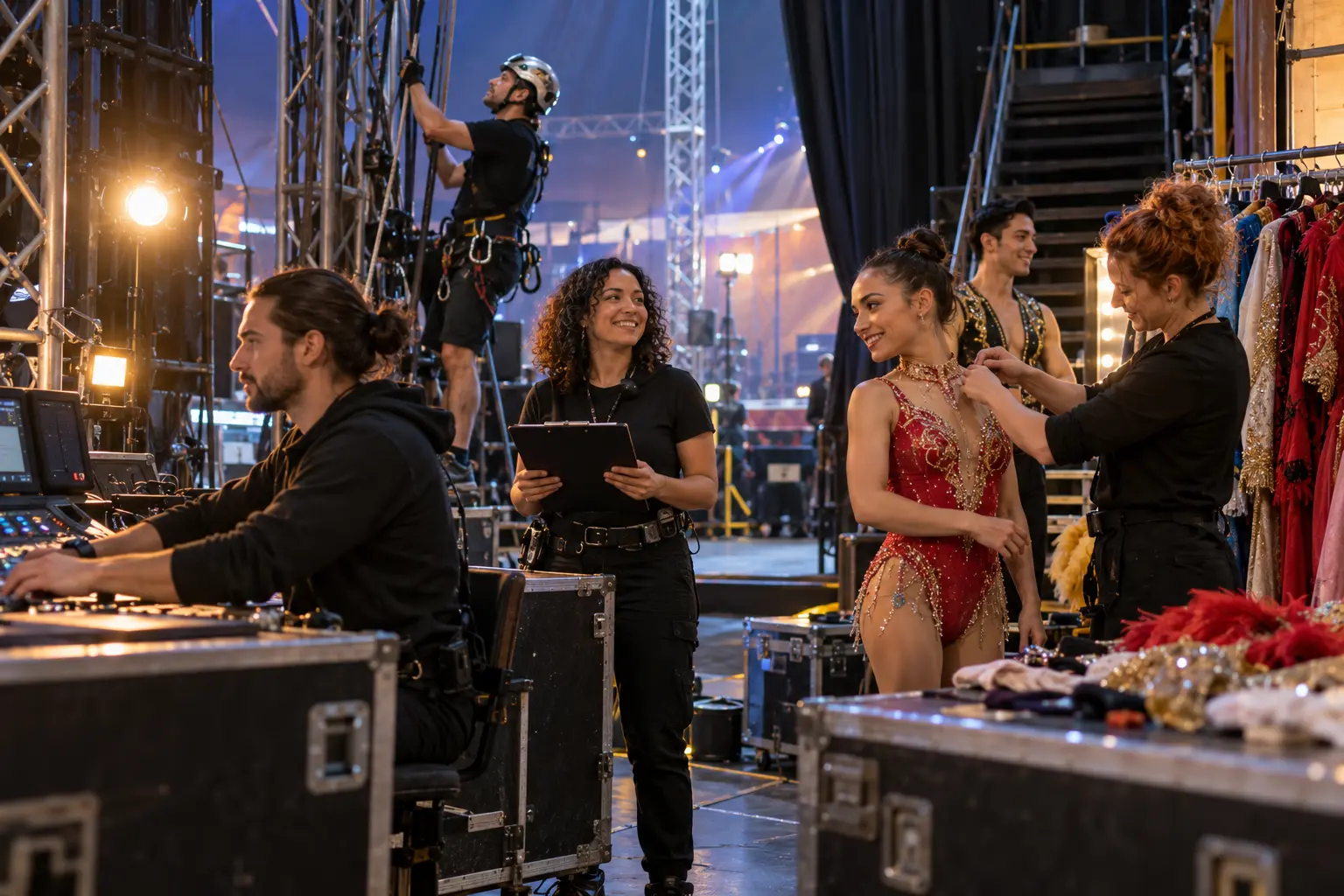
At the same time, a circus supports far more roles than animal handling. A touring production can employ acrobats, riggers, choreographers, stage managers, drivers, lighting and sound technicians, costume teams, ticketing staff and venue crews. Moving away from animal acts can redirect creative and financial investment toward those human skills.
A better question
The useful question is not whether jobs or animals matter more. It is how to protect both animal welfare and workers during a transition.
Animals cannot consent to travel, training or performance. Human beings, by contrast, can redesign a show, learn new skills and create new kinds of spectacle. Ringling’s human-powered model does not prove that every transition will be easy, and it does not settle every debate about circuses. It does show that the core attractions—risk, artistry, surprise and shared excitement—do not require a performing elephant or any other wild animal.
A future with animal-free circuses need not be a future without circus jobs. With thoughtful planning, it can be a future in which human talent carries the show.
Sources
- Ringling Bros. and Barnum & Bailey: current circus program
- Ringling announcement of its 2023 return
- New Jersey P.L. 2018, c. 141 (“Nosey’s Law”)
