
A call to ban boiling lobsters alive worldwide is an animal-welfare proposal, not a rule that currently applies across the globe. But the question rests on a substantial scientific shift: a major evidence review concluded that lobsters and other decapod crustaceans should be treated as sentient animals.
The debate asks whether cooking traditions should change when a less harmful method is available. It also requires precision. Laws differ by country, and legal recognition of sentience does not automatically prohibit every existing commercial or kitchen practice.
What the evidence says about lobster sentience
In 2021, a team commissioned by the United Kingdom’s Department for Environment, Food and Rural Affairs reviewed more than 300 scientific studies involving cephalopod molluscs and decapod crustaceans. The London School of Economics report evaluated behaviors and nervous-system evidence relevant to pain, distress and other subjective experiences.
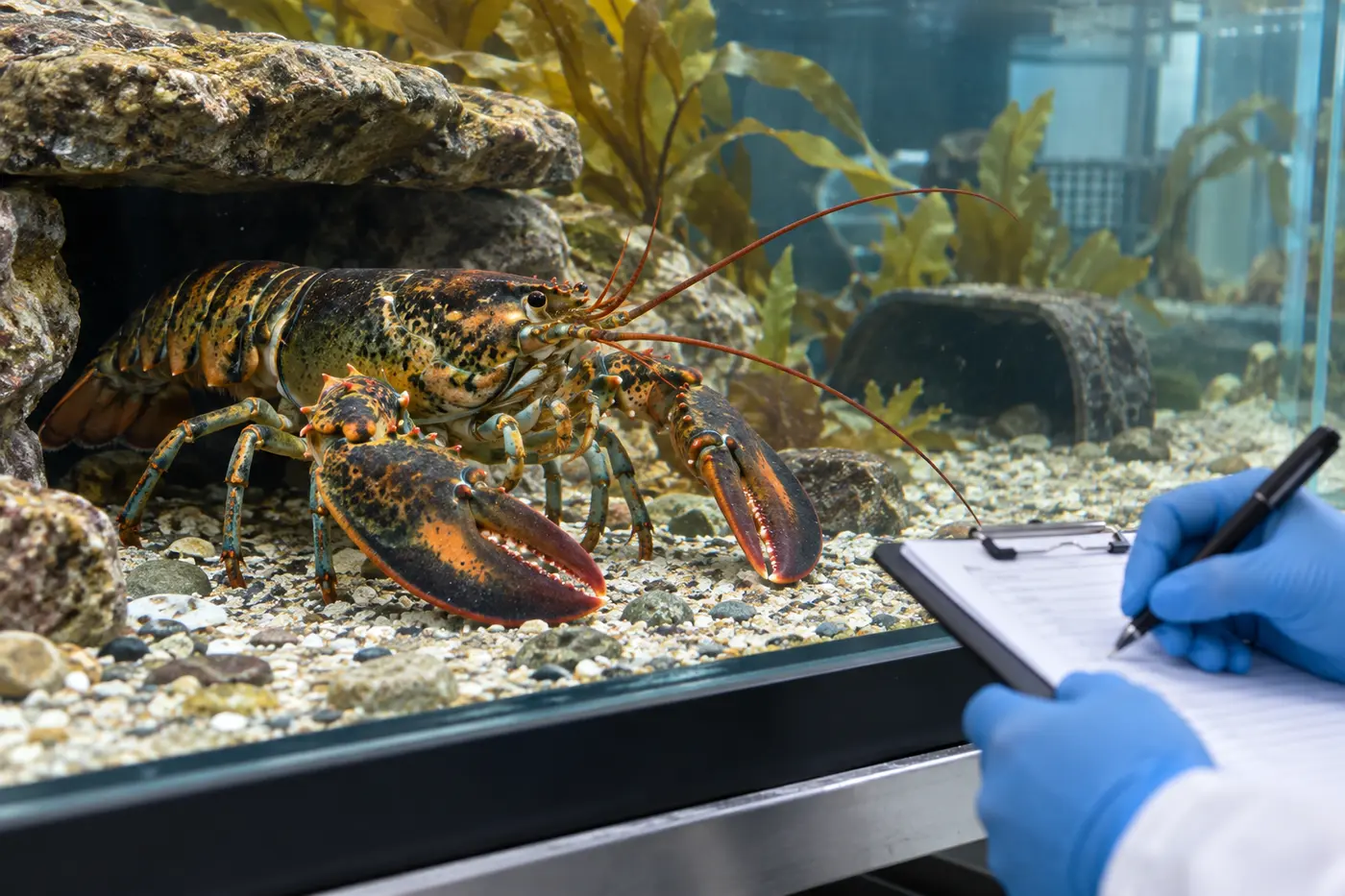
The authors recommended that all decapod crustaceans — a group that includes lobsters, crabs and crayfish — be regarded as sentient for animal-welfare law. The review did not claim that researchers can directly experience what a lobster feels. Instead, it concluded that the evidence was strong enough to justify precautionary protection.
Recognition is not the same as a global ban
The UK government announced in November 2021 that lobsters, crabs, octopuses and related animals would be recognized within the scope of its Animal Welfare (Sentience) legislation. At the time, officials explicitly said that the change would not directly alter existing shellfish-catching or restaurant practices. Its immediate purpose was to make ministers consider these animals’ welfare in future policy decisions.
Other jurisdictions have adopted their own restrictions or handling standards, but there is no single worldwide law governing how lobsters must be killed before cooking. A “global ban” therefore remains an advocacy position that would require many separate governments to change their rules.
The practical question is how suffering can be reduced
For restaurants, seafood businesses and home cooks, changing practice can involve equipment, training, cost and clear guidance. Animal-welfare policy must also distinguish between methods carefully, because not every alternative is automatically humane simply because it avoids boiling an alert animal.

The case for reform is ultimately precautionary: when credible evidence indicates that an animal may experience pain, avoidable exposure to extreme heat while conscious deserves scrutiny. That does not settle every technical or legal question, but it changes the ethical starting point.
The most accurate conclusion today is not that the world has banned boiling lobsters alive. It is that scientific evidence has pushed more governments and members of the public to ask whether the practice should continue — and what enforceable, evidence-based alternatives should replace it.
Sources
- London School of Economics: Review of the Evidence of Sentience in Cephalopod Molluscs and Decapod Crustaceans, November 2021.
- UK Department for Environment, Food & Rural Affairs: Lobsters, octopus and crabs recognised as sentient beings, November 19, 2021.
