
A new wildlife underpass beneath Appin Road in south-west Sydney is intended to give koalas and other native animals a safer route through habitat divided by a busy roadway. The crossing is real, open and purpose-built—but its early results also show why conservation infrastructure must be monitored rather than celebrated on design alone.
The New South Wales government announced the crossing at Noorumba Reserve on 2 September 2026. The concrete passage runs for 52 metres beneath Appin Road and is the first of three underpasses planned for the corridor. About 10,000 vehicles use this section of road each day, according to Transport for NSW.
A crossing designed for more than koalas
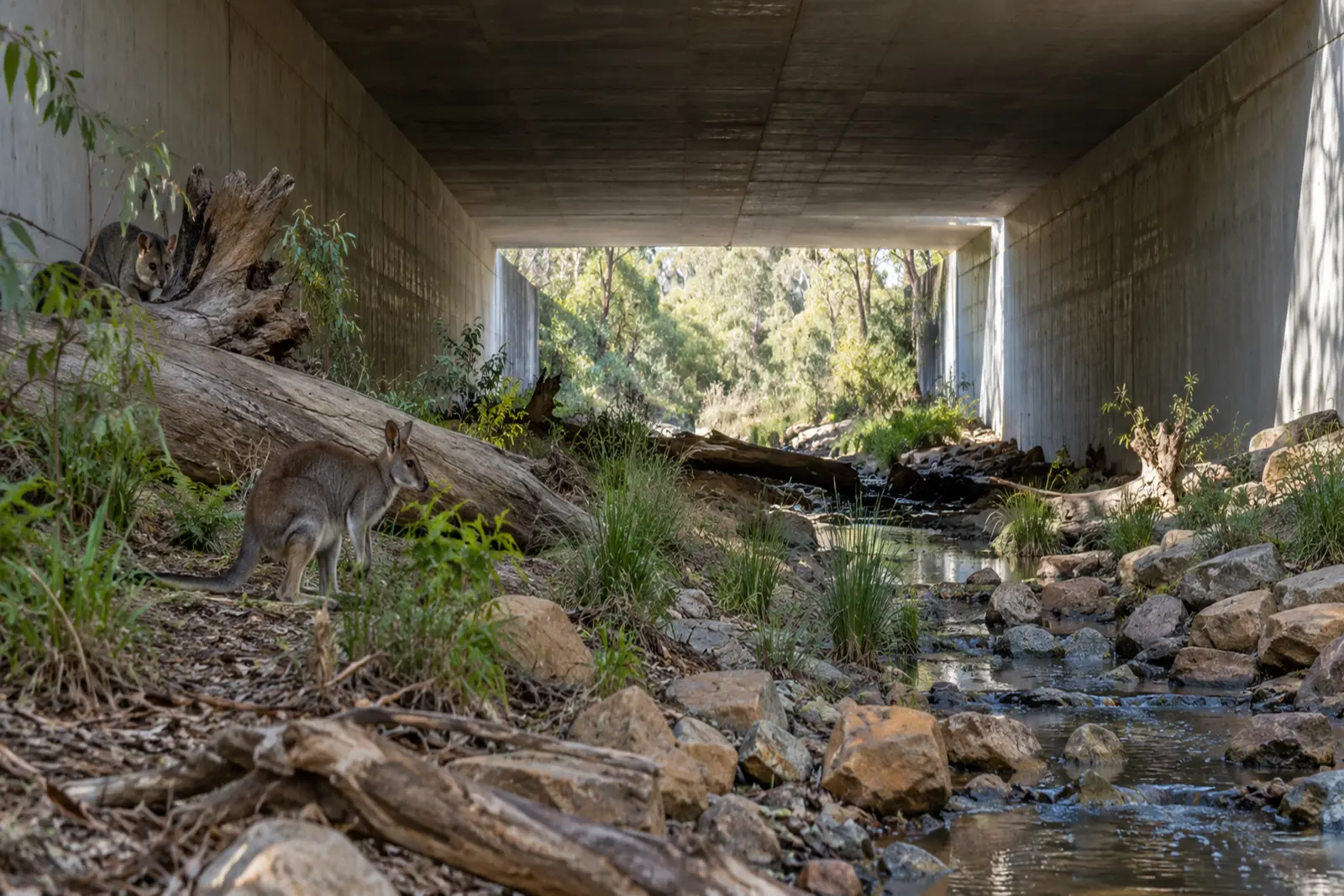
The structure is large enough for kangaroos and wallabies. Logs, native vegetation and other habitat features are intended to make it usable by smaller animals, including koalas, possums and native rodents. Drainage has been incorporated so the route can remain accessible in wet weather.
The underpass is only one part of the system. Around three kilometres of exclusion fencing runs along both sides of Appin Road to steer animals toward the crossing and keep them away from traffic. The project also includes eight koala grids at driveways, 11 one-way escape hatches and seven escape poles for animals that reach the road-facing side of the fence.
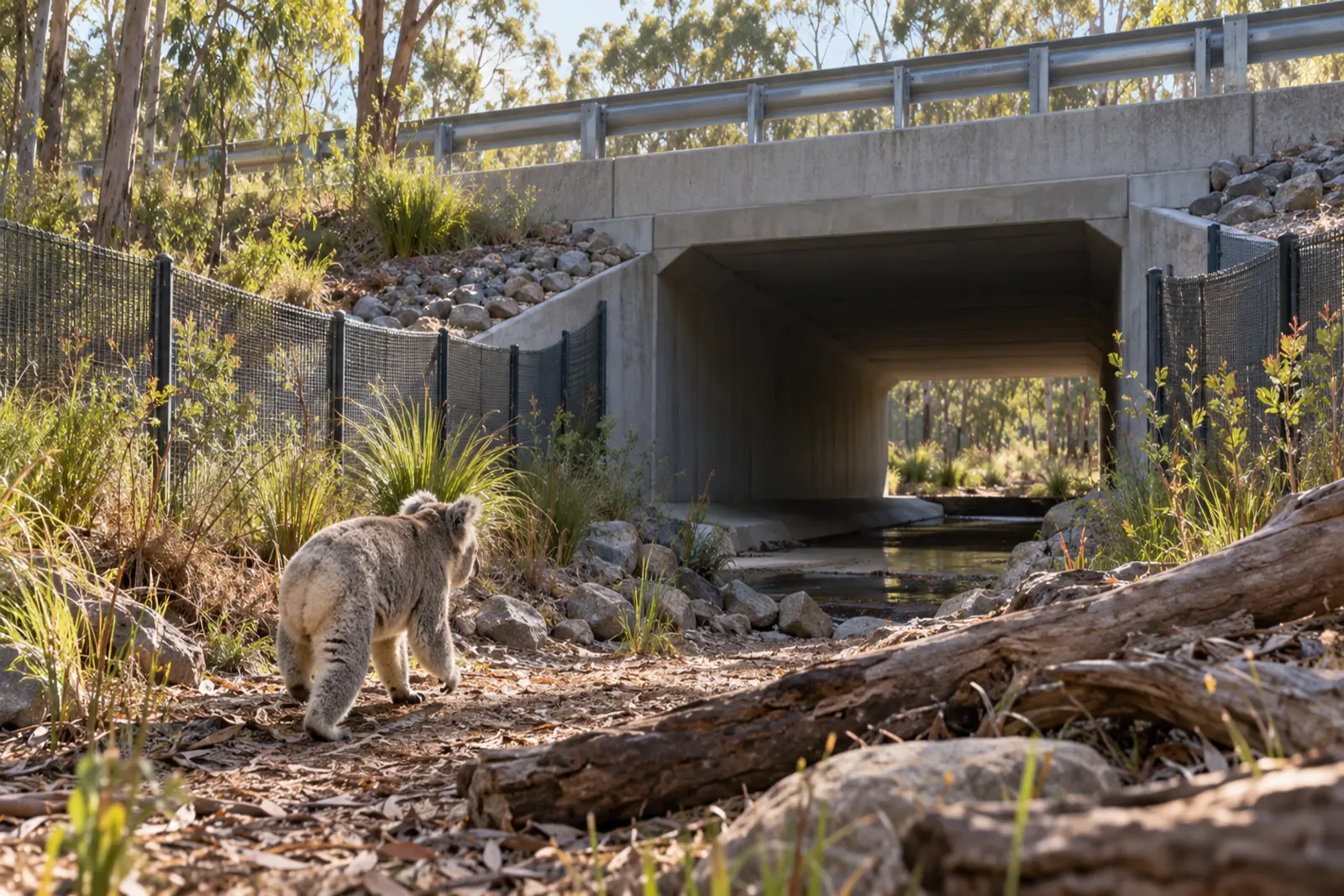
More than 40,000 native plants have also been planted through the corridor, and a fauna rope crossing provides another movement option for wildlife. These details matter: an isolated tunnel does not reconnect habitat by itself. Fencing, suitable approaches, cover and long-term maintenance determine whether animals can find and safely use it.
The important early caveat
The crossing should not yet be described as a proven success for koalas. ABC News reported on 3 September that cameras had not recorded a koala using the underpass during its first five months open to wildlife. Researchers told the broadcaster that koalas have used underpasses elsewhere, but detections can be infrequent and animals may take substantial time to adopt a new structure.
That does not mean the project has failed. The NSW government says fencing along the upgraded section of Appin Road has been associated with an 80 percent reduction in koala strikes. It is continuing to monitor the new passage to learn how the underpass, fencing and other safeguards work together. Monitoring should show which species use the crossing, how often they use it and whether adjustments are needed.
More crossings are planned
A second underpass is planned near the Beulah BioBank site, while work on a third at Ousedale Creek near Brian Road is expected to proceed as part of a broader koala corridor program. NSW Planning says the state has committed $26.7 million to three koala-friendly crossings in Appin, including two beneath Appin Road and another across the WaterNSW Upper Canal system.
The goal is larger than helping one animal reach the opposite side of one road. Roads fragment habitat and expose wildlife to vehicles as animals travel for food, mates and shelter. Well-placed crossings can reconnect those movements—but their value has to be demonstrated through transparent monitoring and improved when the evidence demands it.
For the Appin Road crossing, the fairest conclusion is cautious: it gives native animals a route that did not exist before and includes substantial supporting infrastructure. Whether koalas come to use it regularly remains an open, measurable question.
Sources
- NSW Government: New Appin Road underpass delivers safer passage for koalas
- NSW Planning: Protecting koalas
- ABC News: No koalas spotted inside purpose-built underpass after five months
