
The Himalayan Blood Pheasant (Ithaginis cruentus) is a striking marvel among the region’s wildlife. Known for its vibrant crimson and brown plumage, this captivating bird has charmed birdwatchers and nature enthusiasts with its unique beauty and elusive nature.
Also called the Crimson Horned Pheasant, the Blood Pheasant belongs to the Phasianidae family and thrives in high-altitude areas across Nepal, Bhutan, India, and China.
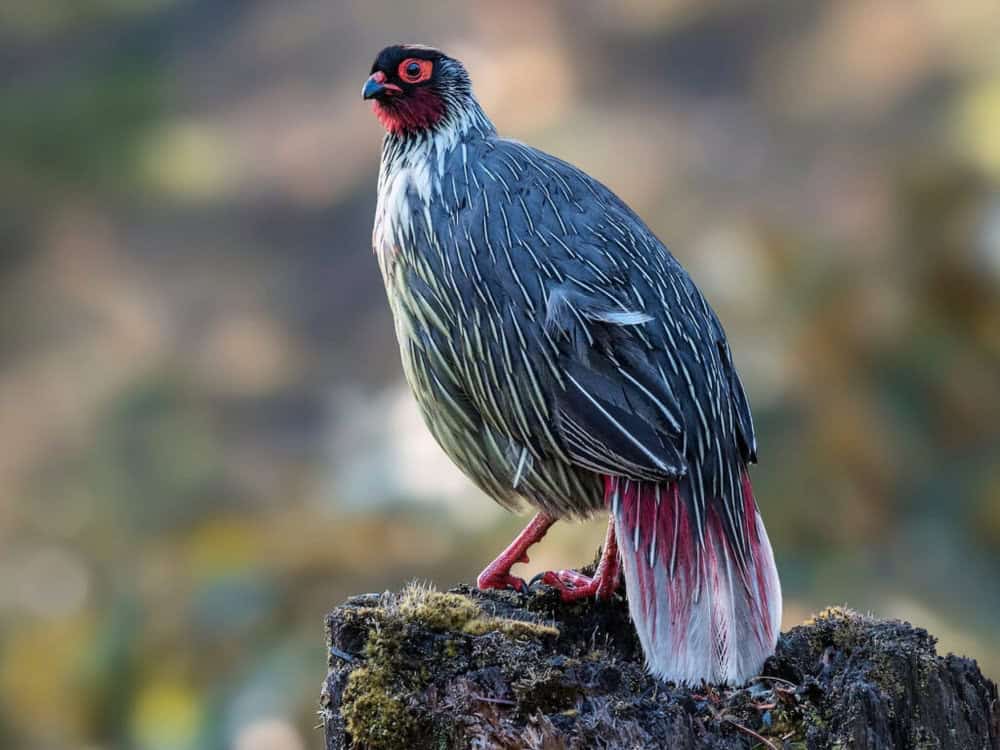
Favoring alpine and subalpine habitats, it usually lives between 2,400 and 4,200 meters (7,900 to 13,800 feet) above sea level, where dense shrubs and grassy slopes offer an ideal home.
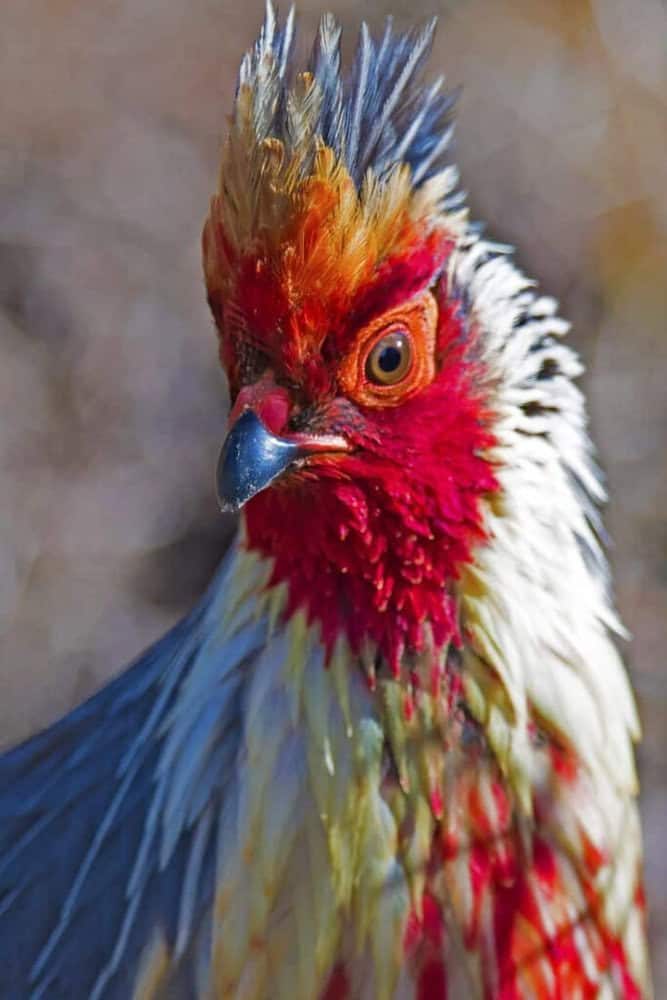
The Blood Pheasant’s appearance is as distinctive as its name suggests. Males display an intense red hue on their heads, necks, and chests, contrasted by deep brown feathers on their bodies—a coloration that inspired the species’ unusual name.
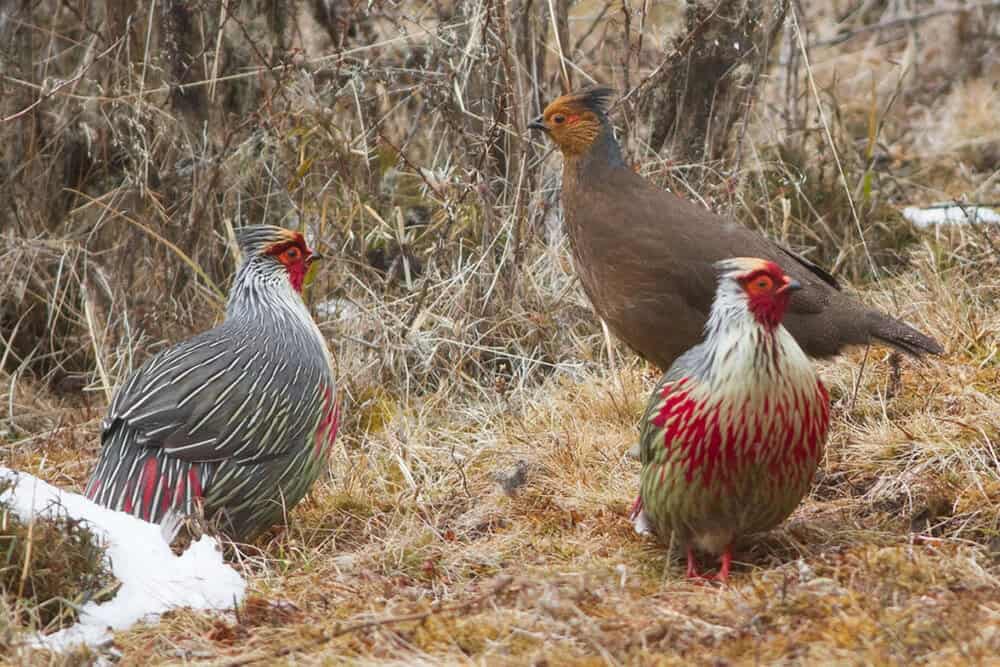
In contrast, females have mottled brown plumage that provides camouflage against predators, blending seamlessly with their surroundings. This medium-sized bird, including its long tail, reaches 40 to 58 centimeters (16 to 23 inches).
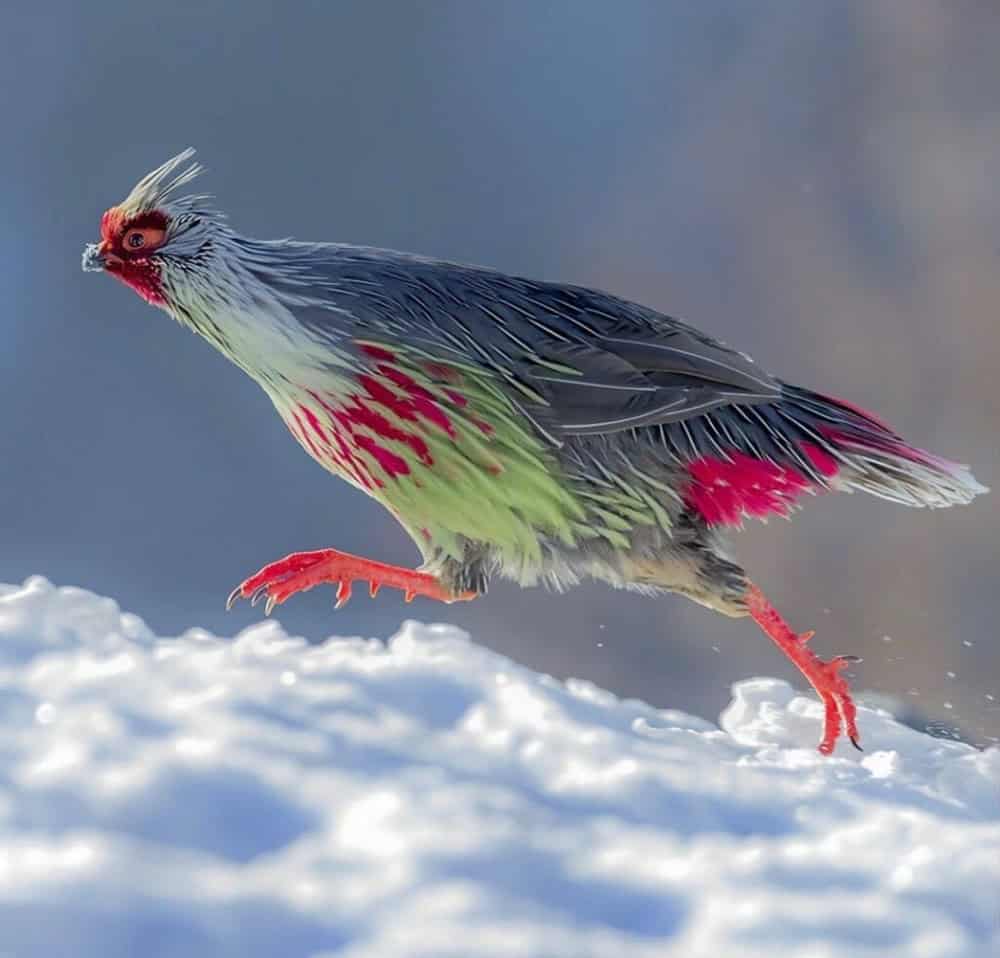
Males tend to weigh between 700 and 800 grams (1.5 to 1.8 pounds), slightly more than females, who typically range from 600 to 700 grams (1.3 to 1.5 pounds). With their sturdy build, these birds are well-suited for mountain life, moving adeptly across steep terrains.
Primarily ground-dwellers, Blood Pheasants rely on strong legs and talons to climb rocky slopes and cliffs. They are mostly herbivorous but consume insects, worms, and other small invertebrates.
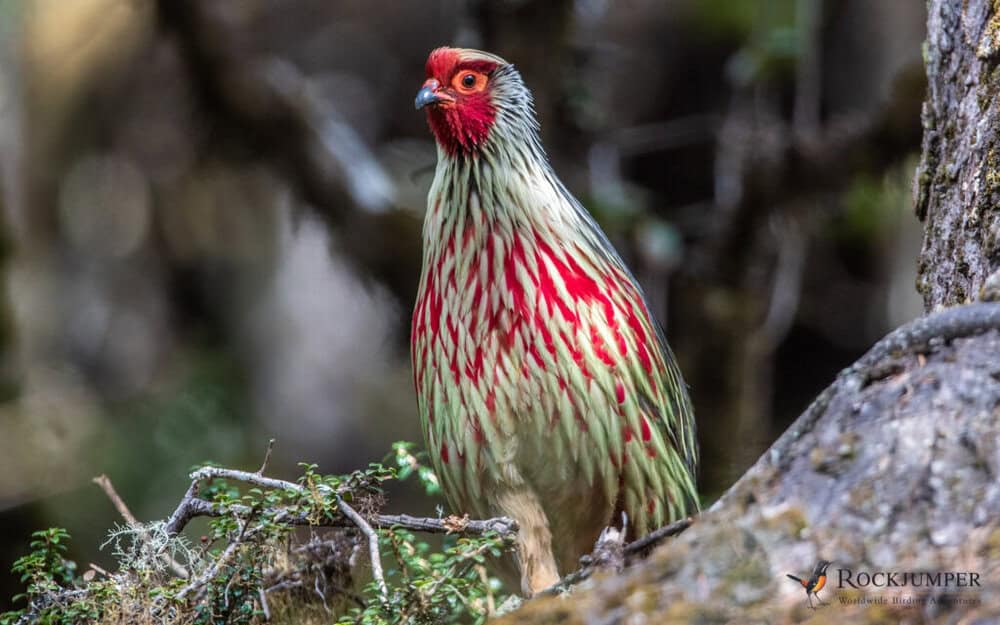
During the breeding season, from April to June, males perform elaborate displays to attract mates, fanning their tail feathers and calling out in the serene mountain environment.
However, the Blood Pheasant faces growing threats. Deforestation, infrastructure projects, and agricultural expansion contribute to habitat loss, while illegal hunting and wildlife trade place additional pressure on the species.
Although the International Union for Conservation of Nature (IUCN) lists the Blood Pheasant as “Least Concern,” conservation measures remain essential to preserve its future.
The Blood Pheasant embodies the rich diversity of Himalayan wildlife, fascinating observers with its vibrant colors, unique habitat, and intriguing behavior. Its preservation is crucial for sustaining the region’s natural heritage.
Read More Birds
