
A newborn Asian elephant calf that was swept downstream in India’s Teesta River was rescued by five fishermen and later reunited with its mother after a coordinated effort with West Bengal forest officials.
The incident unfolded on September 21, 2026, near Gajoldoba in Jalpaiguri district. Reports said an elephant herd was crossing the rain-swollen river when the tiny calf lost its footing and was carried away by the current. Forest officials estimated that the animal was only about four days old.
A small boat catches up with the calf
The calf drifted roughly four kilometres from the herd before local fishermen spotted it struggling in the water. Five men set out in a small rowboat, reached the exhausted animal and pulled it aboard. Video and photographs from the rescue showed the calf lying low in the boat as the fishermen brought it toward safety.
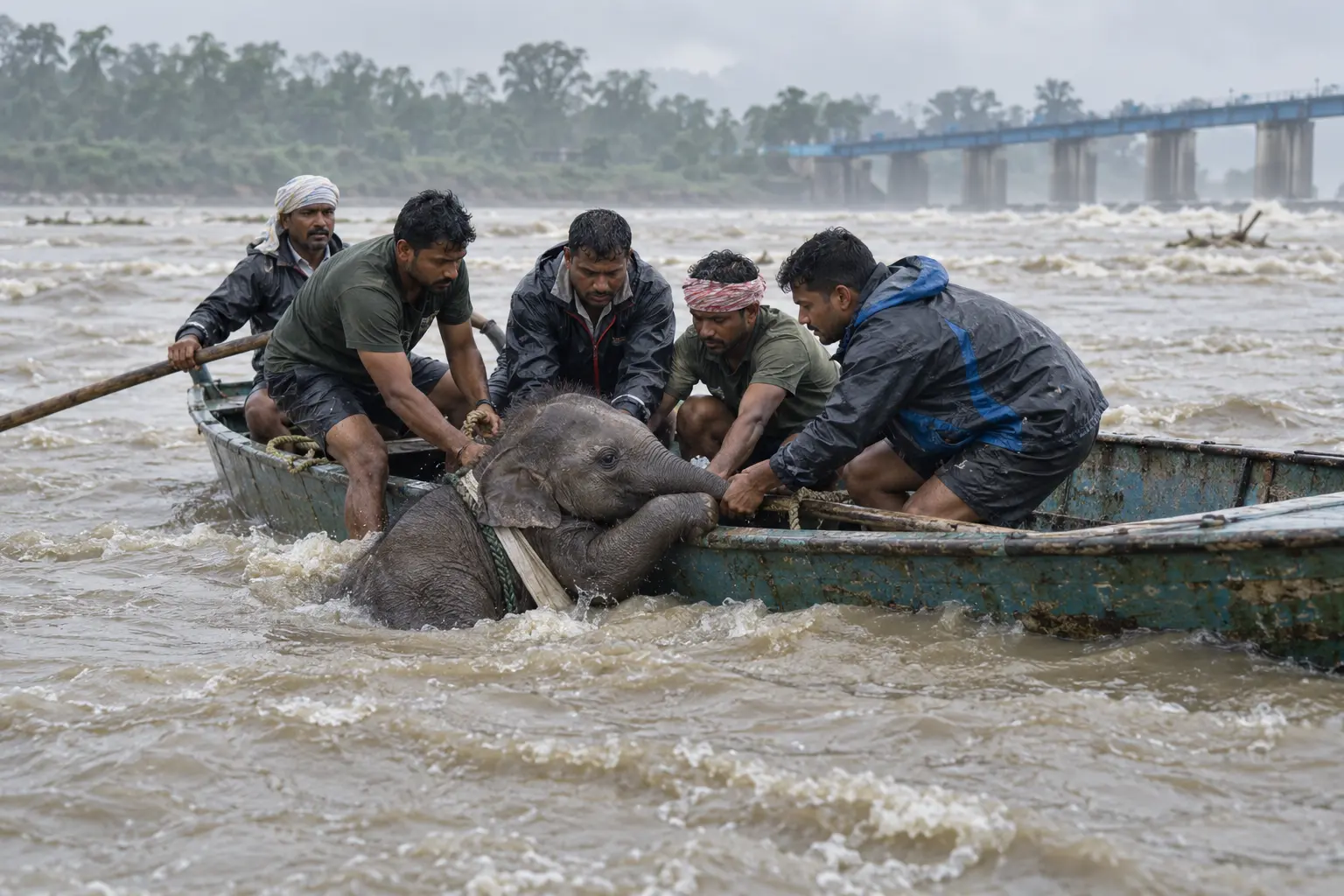
The rescue was only the first half of the job. A very young calf depends on its mother for protection, nourishment and guidance, so returning it to the herd quickly—and without causing more stress—was crucial. The fishermen handed the animal to staff from the Baikunthapur Forest Division, who then worked out how to bring it back to the area where the herd had moved.
Officials transported the calf across the barrage and toward a dry stretch of the riverbed near the forest. Meanwhile, the mother had reportedly reached the riverbank and was searching for her missing calf.
A reunion after nearly two hours
The operation took close to two hours of coordination between the fishermen and the Forest Department. Once the calf was placed near the herd’s location, the mother approached and accepted it back. The pair then moved away toward the forest together.
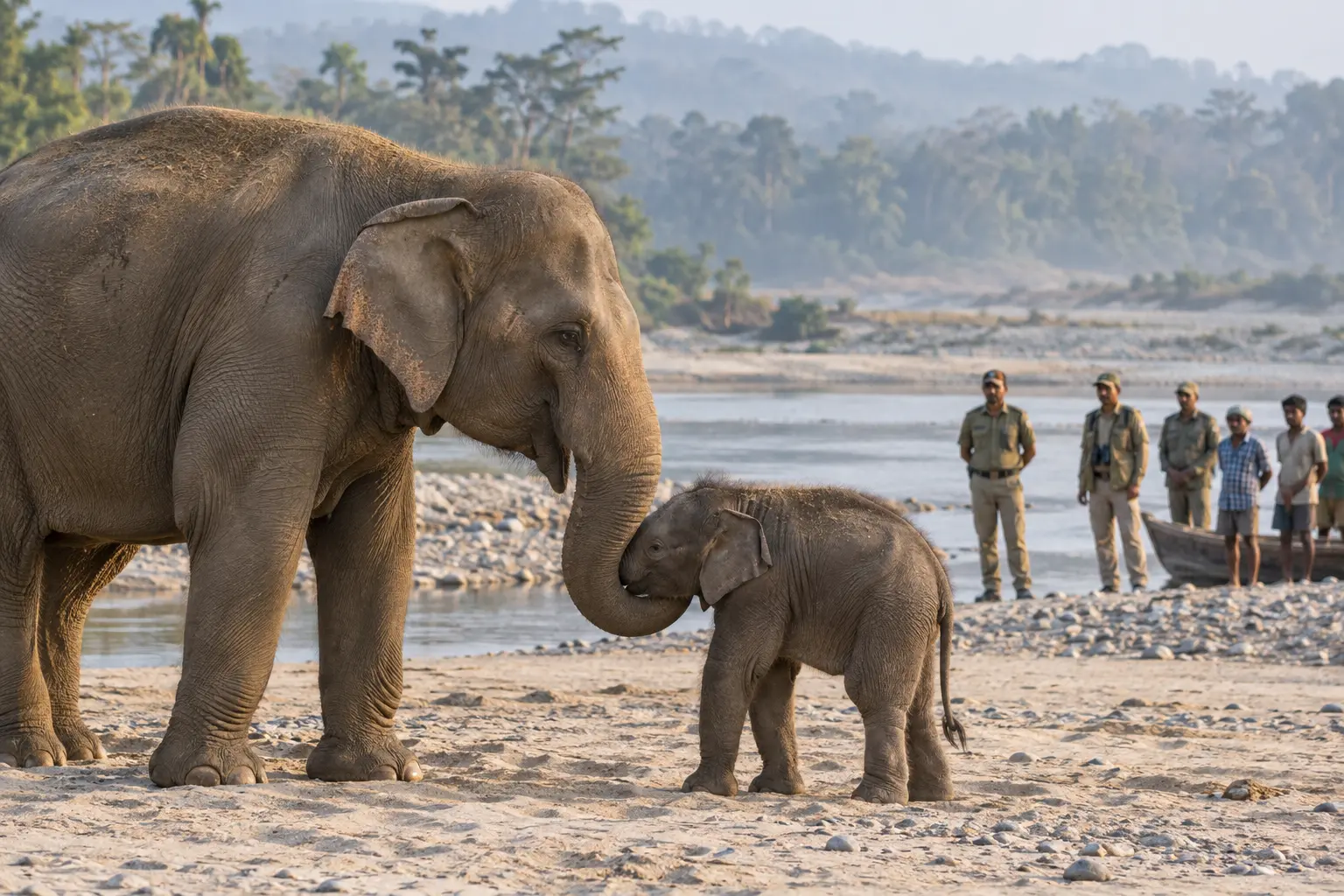
That outcome matters because attempts to “help” a wild calf can sometimes complicate a reunion. Prolonged handling, crowds and noise can increase stress, while moving an animal without knowing where its herd has gone can leave it even more vulnerable. In this case, the fishermen’s rapid response was followed by professional coordination aimed at restoring the calf to its family rather than keeping it in human care.
A rescue shaped by local knowledge
The Teesta is a powerful Himalayan river whose channels and currents can change quickly during periods of high water. People who fish and travel on it regularly often understand its hazards better than anyone. Their ability to reach the calf in a small boat, keep it aboard and transfer it safely gave forest officials the chance to complete the reunion.
The story also shows why wildlife rescues are often shared efforts. The fishermen could respond immediately on the water, while forest personnel could assess the calf, locate the herd and manage the release. Neither part alone would have guaranteed the same result.
According to reports from The Indian Express, The Times of India and Reuters Connect, the calf was returned safely to its mother. What began as a dangerous separation in a fast-moving river ended with the youngest member of the herd back where it belonged.
