
Every migration season, animals face a choice they never evolved to make: stop at a ribbon of speeding traffic or try to cross it. For deer, elk, bears, mountain lions and smaller wildlife, that decision can be fatal. It is dangerous for people too.
The scale of the problem is large. The Federal Highway Administration says Congress found that more than one million wildlife-vehicle collisions occur each year in the United States. Those crashes are associated with tens of thousands of serious injuries, hundreds of deaths and more than $8 billion in annual costs.
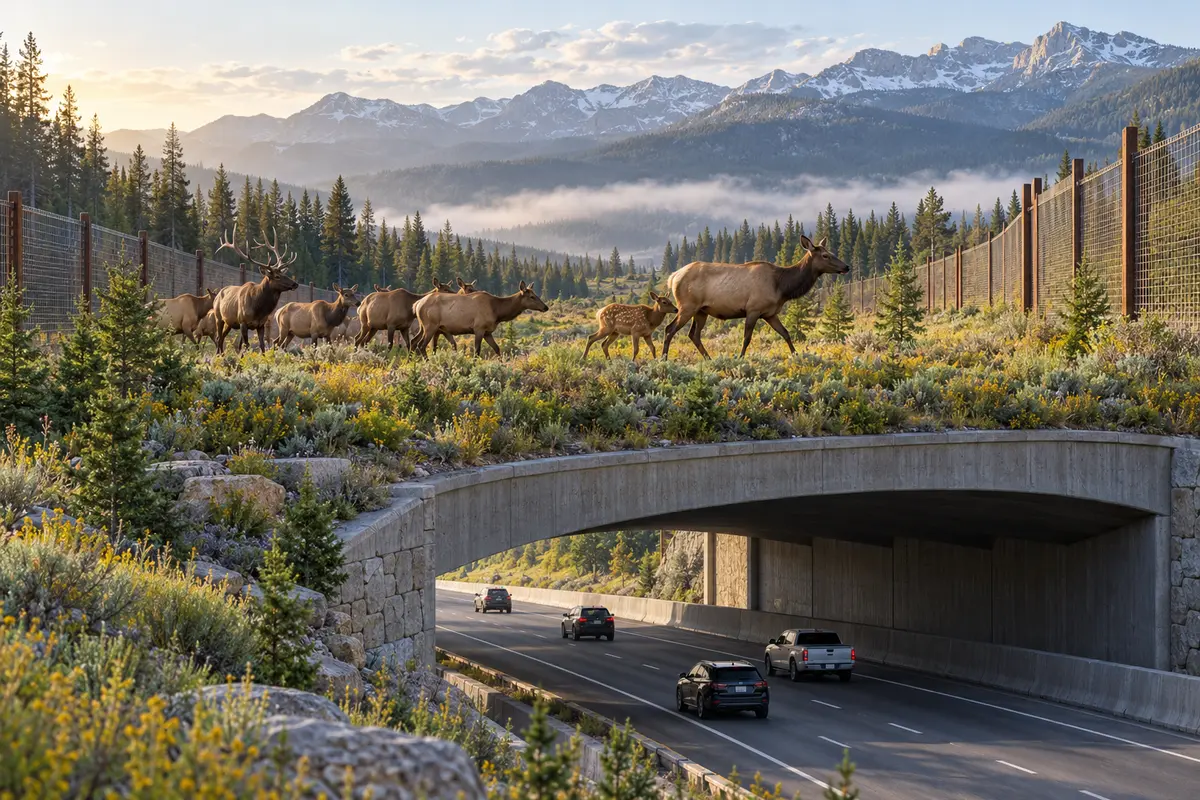
Wildlife crossings—vegetated bridges, culverts and underpasses designed for animals—offer a practical way to reconnect habitat divided by roads. But the structures work best as part of a system: fencing directs animals toward a safe passage, the location matches their natural movement routes, and monitoring shows whether the design serves the species that live there.
What the evidence actually shows
A widely cited FHWA review found that wildlife fencing, used either alone or together with crossing structures, reduced collisions involving deer and other large animals by an average of 87 percent across the studies examined. The results ranged from 80 to 99 percent. That does not mean every overpass automatically delivers an 87 percent reduction. It means carefully designed mitigation systems can be highly effective when fencing, placement and maintenance fit local conditions.
Real-world studies reinforce that point. Along U.S. Highway 64 in North Carolina, researchers with the U.S. Geological Survey found that wildlife underpasses and fencing were associated with about 58 percent fewer wildlife road mortalities. The benefit was measurable, but not absolute—another reminder that species behavior, landscape and roadway design matter.
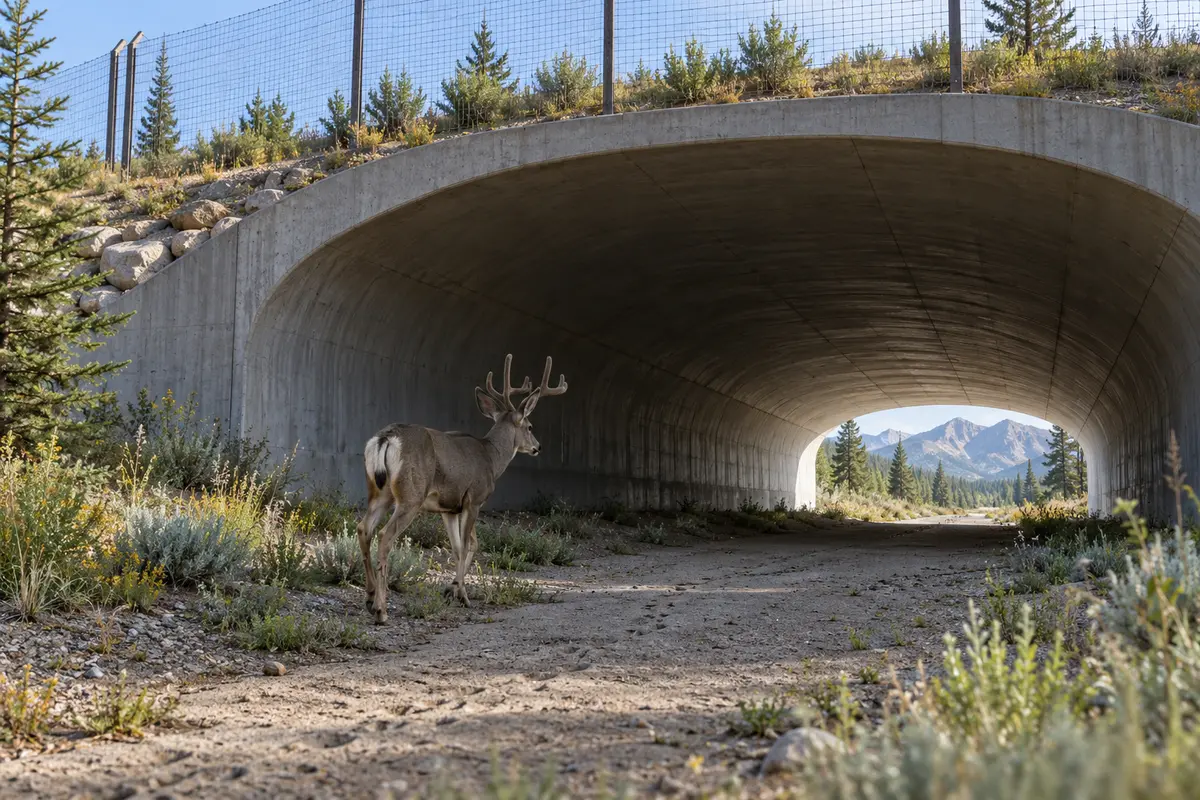
Different animals need different solutions. Large mammals may use broad, landscaped overpasses, while amphibians, reptiles and small mammals may rely on smaller tunnels or culverts. Some wary species need quieter approaches and visual cover. For all of them, gaps in fencing or poorly placed entrances can weaken the entire system.
Why funding matters
Crossings can be expensive to build, especially when they are added to an existing highway. Yet the price has to be weighed against repeated crash costs, emergency response, vehicle damage and the ecological loss caused when roads isolate populations.
The federal Wildlife Crossings Pilot Program was created to help states, Tribes and local governments fund projects that reduce wildlife-vehicle collisions while improving habitat connectivity. The Infrastructure Investment and Jobs Act provided $350 million for the program over five fiscal years through 2026. FHWA announced $110 million for 19 projects in the first round and another $125 million for 16 projects in the second round.
Demand has exceeded available funding, according to FHWA. That makes the public question behind this story a real policy choice: whether governments should keep investing in proven mitigation where collision data and animal movement studies show the greatest need.
The strongest answer is not to build crossings everywhere. It is to target dangerous corridors, combine structures with effective fencing, maintain them over time and measure the results. Done well, wildlife crossings can protect animals without asking drivers to trade safety for conservation. They can improve both.
Sources
- Federal Highway Administration: Wildlife-Vehicle Collision Reduction Study
- Federal Highway Administration: Wildlife Crossings Pilot Program
- Federal Highway Administration: $125 million second-round awards
- U.S. Geological Survey: Wildlife underpasses and road mortality on U.S. Highway 64
